Showing posts with label PARIS. Show all posts

Sunday, September 4, 2011

Paris vs New York


much more @ :

If It's Hip, It's Here: 35 Graphic Design Posters by Vahram Muratyan Compare Paris With New York.

"A journey of a thousand miles must begin with a single step." -- Lao Tzu Copyright © Demetrios the Traveler

Thursday, September 1, 2011

Saturday, March 5, 2011

I love Paris


"A journey of a thousand miles must begin with a single step." -- Lao Tzu Copyright © Demetrios the Traveler

Sunday, January 30, 2011

France the people and their language


EF - Live The Language - Paris from Albin Holmqvist on Vimeo.
Commercial for EF Language Schools.

Directed by Gustav Johansson
D.O.P: Niklas Johansson
Typography: Albin Holmqvist
Produced at Camp David

"A journey of a thousand miles must begin with a single step." -- Lao Tzu Copyright © Demetrios the Traveler

Monday, September 20, 2010

Opening of the new rooms devoted to Classical Greek and Hellenistic art | Louvre Museum

The museological approach

Housed in the southwest corner of the Cour Carrée (Sully wing), this ensemble comprises two galleries formerly part of the royal apartments and leading to the famous Caryatids Room, thus completing the chronological presentation of ancient Greek art.

The first gallery, to the north (Rooms 7–12) is part of the wing built for the Renaissance palace. This restructuring offers an authentic journey through the Greek world of the period from the Parthenon to the conquest of Greece by Rome. Each room brings together artifacts from a specific part of the Greek world in a range of materials and media, including vases, jewelry, sculpture and architecture. The visitor will discover art from Athens and central Greece, the Greek cities of southern Italy, Macedonia and northern Greece, Asia Minor and all of the Hellenistic Near East, and Greek Egypt and Cyrenaica (modern Libya). 

More recent and running parallel to the first, the second gallery, to the south (Rooms 13–16), was inaugurated in the early 19th century, with courtyards being transformed into the Musée des Antiques, whose contents included the Borghese Collection. Today's refurbishing presents Roman copies of vanished masterpieces of Classical Greek sculpture; it follows a thematic path dedicated to the gods and heroes of mythology and ending in the Venus de Milo room, with the famous statue returning to the place it occupied from 1824 to 1848. In the newly rediscovered niches of the original building the history of the statue's finding is shown, together with images of Aphrodite from the Hellenistic period.

The itinerary then continues through the remodeled Caryatids Room, where the replicas of Hellenistic Greek sculpture are on display. Highlighting some of the oldest rooms in the museum, this new project improves public access to works sometimes overshadowed by the fame of the Venus de Milo, while at the same time making the latter easier to find.


Tuesday, December 22, 2009

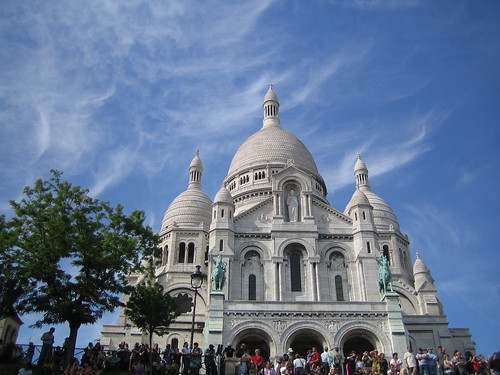
Basilique du Sacré Cœur, Paris, France


Benediction, originally uploaded by killy keng.
With its origins in the aftermath of the French Revolution among ultra-Catholics and legitimist royalists, developed more widely in France after the Franco-Prussian War and the ensuing uprising of the Paris Commune of 1870-71.
Though today it is asserted to be dedicated in honor of the 58,000 who lost their lives during the war, the decree of the Assemblée nationale, 24 July 1873, responding to a request by the archbishop of Paris by voting its construction, specifies that it is to "expiate the crimes of the communards".
Montmartre had been the site of the Commune's first insurrection, and many hard-core communards were forever entombed in the subterranean galleries of former gypsum mines where they had retreated, by explosives detonated at the entrances by the Army of Versailles. Hostages had been executed on both sides, and the Communards had executed Georges Darboy, Archbishop of Paris, who became a martyr for the resurgent Catholic Church.
His successor Guibert, climbing the Butte Montmartre in October 1872, was reported to have had a vision, as clouds dispersed over the panorama: "It is here, it is here where the martyrs are, it is here that the Sacred Heart must reign so that it can beckon all to come".

In the moment of inertia following the resignation of the government of Adolphe Thiers, 24 May 1873, François Pie, bishop of Poitiers, expressed the national yearning for spiritual renewal— "the hour of the Church has come"— that would be expressed through the "Government of Moral Order" of the Third Republic, which linked Catholic institutions with secular ones, in "a project of religious and national renewal, the main features of which were the restoration of monarchy and the defense of Rome within a cultural framework of official piety", of which Sacré-Cœur is the chief lasting triumphalist monument.
The decree voting its construction as a "matter of public utility", 24 July, followed close on Thiers' resignation. The project was expressed by the Church as a National Vow (Voeu national) and financial support came from parishes throughout France.
The dedicatory inscription records the Basilica as the accomplishment of a vow by Alexandre Legentil and Hubert Rohault de Fleury, ratified by Joseph-Hippolyte Guibert, Archbishop of Paris. The project took many years to complete.

"A journey of a thousand miles must begin with a single step." -- Lao Tzu
Copyright © Demetrios the Traveler

Friday, October 30, 2009

Oh La La...!! a PAris... City of light

happy weekend


"A journey of a thousand miles must begin with a single step." -- Lao Tzu
Copyright © Demetrios the Traveler


Digg!


Friday, October 23, 2009

Paris France an urban scene


, originally uploaded by P•A•U•L | Photography.

In architecture, a gargoyle is a carved stone grotesque with a spout designed to convey water from a roof and away from the side of a building
The term originates from the French gargouille, originally "throat" or "gullet"; cf. Latin gurgulio, gula, and similar words derived from the root gar, "to swallow", which represented the gurgling sound of water (e.g., Spanish garganta, "throat"; Spanish gárgola, "gargoyle").
A chimera, or a grotesque figure, is a sculpture that does not work as a waterspout and serves only an ornamental or artistic function. These are also usually called gargoyles in layman's terminology, although the field of architecture usually preserves the distinction between gargoyles (functional waterspouts) and non-waterspout grotesques.

Sunday, September 20, 2009

Eiffel Tower vs. the Obelisk of Luxor, Paris France


The Battle, originally uploaded by Allard One.


"A journey of a thousand miles must begin with a single step." -- Lao Tzu
Copyright © Demetrios the Traveler


Digg!


Wednesday, August 26, 2009

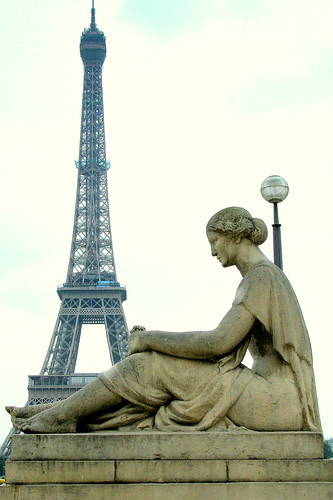
Paris Trocadero, The Lady and the Tower


The Lady and the Tower, originally uploaded by Kurlylox1 (very busy!).

The Trocadéro, site of the Palais de Chaillot, is an area of ParisFrance, in the 16th arrondissement, across the Seine from the Eiffel Tower. The hill of the Trocadéro is the hill of Chaillot, a former village.

Trocadero is an island inside the Bay of Cadiz, in the South of Spain, bordering the Spanish mainland. Nowadays, it is conected to Cadiz by the bridge that goes across the bay. Originally, the name trocadero refers to an emporium or place of trade.
In the Battle of Trocadero, the fortified position on the Cádiz was captured on August 311823, by French forces led by the Duc d'Angoulême, son of the future king, Charles X, in a battle against the Spanish army that took place in the island of Trocadero. The goal of the French invasion of Spain limited to intervening against the Spanish liberals who were rebelling against the autocracy of Ferdinand VII. Trocadero,unfortunately, restored the autocratic Spanish Bourbon Ferdinand VII to the throne of Spain, in an action that defined the Restoration.
Today that square is officially named Place du Trocadéro et du 11 Novembre, although it is usually simply called the Place du Trocadéro.
Five avenues come from the Trocadéro: the avenue Henri-Martin which goes to the porte de la Muette and passes in front of the lycée Janson de Sailly (Janson de Sailly secondary school); the avenue Paul Doumer which goes to the Muette; the avenue d'Eylau which goes to the place of Mexico; the avenue Kléber which goes to the place de l'Etoile; and the avenue d'Iéna which goes to the musée Guimet. There is a big municipal library near the Trocadéro's square. The high retaining walls of the Trocadero cemetery were constructed by the French industrialist François Coignet.
useful links:

"A journey of a thousand miles must begin with a single step." -- Lao Tzu
Copyright © Demetrios the Traveler


Digg!


Friday, October 17, 2008

Absinthe makes a comeback in U.S., Europe ...ενα ταξίδι στον παράδεισο του Αψέντι


Proprietors introduce a new generation to its drinking rituals and mystique as myths of its hallucinogenic qualities are dispelled.
By Kevin Capp, Special to The Los Angeles Times01:26 PM PDT, October 15, 2008
Paris


I've come to the Paris Red Light District to kiss the Green Fairy full on the mouth, to sample the city's absinthe houses, where the notorious and powerful liquor is still cloaked in mystery.
Absinthe's supposed hallucinogenic properties once caused people to equate it with a sinister Tinker Bell, and it is this legacy that permeates Parisians' view of the drink. Many I spoke with still think it's illegal.
This is because absinthe harks back to a specific time and place that's suffused with legend and mystique. While the muse-like virtues of the green liqueur were extolled by Paris artists and writers during the late 19th and early 20th centuries, absinthe was ultimately banned in the United States (1912) and in France (1915), amid fears that it induced madness.

Four types of absinthe in Paris
It's recommended that you use about four measures of very cold water per measure of absinthe, but don't overdo it, because the more water you use, the more diluted the flavour. Although some manufacturers say you can drink theirs without sugar, the sweetness does help lessen absinthe's bitter bite. Here's how four types available in Paris taste following this basic formula:

• Versinthe (90 proof) -- Herbal kick makes it taste stronger
• Nouvelle-Orléans (136 proof) -- Floral component makes it gentle and savoury-sweet
• Mansinthe (132.2 proof) -- Piquant aroma hints at its strong flavour -- a pleasure
• Roquette 1797 (150 proof) -- Spicy yet mild -- the definition of "complex"

The primary culprit: thujone, the chemical found in wormwood, which was said to make imbibers hallucinate.
But absinthe is making a comeback in America and in Europe, thanks in part to studies that have shown that its dangers were exaggerated.
Today, with thujone content heavily regulated, absinthe is again being served around the world, including in California and, yes, Paris, where a history of bohemian behaviour seems perfectly suited to the anise-flavoured drink.
At three establishments here, I found the transcendent risk associated with absinthe, however exaggerated, is just as seductive as the complex ritual undertaken before consuming it.
In other words, one gets to feel like a bohemian without, theoretically, going bonkers.

I begin slowly at the lobby off the Royal Fromentin (11 Rue Fromentin, www.hotelroyalfromentin.com),

in the heart of Paris, where I drink a glass of versinthe, absinthe's weaker sister. The hotel's wood panels, ornate mirror and elaborate stone facade add to the jubilant Belle Époque vibe, as does the intricate glass fountain sitting on my table.

The Hotel Royal Fromentin has revived the myth of absinthe in a book written by Marie-Claude Delahaye, author of numerous works about absinthe and founder of the Musée de l'Absinthe in Auvers-sur-Oise. Let your imagination wander as you sip a glass of absinthe in the mythical bar of the former Don Juan Cabaret. Discover the authentic absinthe ritual in the very heart of this “quartier” of Paris, just as Van Gogh, Toulouse Lautrec, Baudelaire and so many others did before you. Here are some excepts from this book now available at the hotel.

Discover our « quartier » the way it was during the exciting “Belle Epoque” at the end of the 19th century. In the heart of Paris , in a neighbourhood steeped in history, the Hotel Royal Fromentin is the ideal spot to step back in time and discover absinthe. It was indeed a tradition in this area of Paris where the Belle Epoque poets and artists gathered, leaving a rich artistic legacy. At the junction of the famous “quartiers” of New Athens, Saint Georges and Montmartre , the rue Fromentin witnessed artists, poets, writers and performers on their way to the numerous cafés and cabarets in the area. And absinthe, the fashionable drink at the time, was served everywhere.
Often called the “Green Fairy” or “ the Muse”, the inspiration of many an artist, absinthe vapours floated in the air, their heady anise perfume escaping out on to the “Grands Boulevards” where cafés flourished and the atmosphere was carefree. From one café to the next, noisy groups of revellers made their way, sustained by numerous libations. The lobby of the hotel, formerly the Don Juan cabaret, has preserved all the charm of its origins with its wooden beams and painted wood panelling, its two great chimneys and its caryatids. Settle comfortably into one of the armchairs, in the heart of this “quartier” where so many famous artists once lived. Let your imagination wander down its streets where the fragrance of absinthe seems to magically linger yet.

Even though versinthe pales compared with genuine absinthe, you still prepare it the same way: by placing a measure of the liqueur in a thick, wide-mouthed glass, resting a slotted silver spoon holding a sugar cube across the glass, and then slowly letting icy water drip from the fountain's spigot onto the sugar until it melts away. This dilutes absinthe's bitterness and awakens its herbs and essential oils.

At the wine and spirits shop Les Caves du Roy (31 Rue Simart, www.cavesduroy.fr) you can learn all about absinthe from English-speaking absinthe connoisseur Camille Naud and select from about 30 types.
You also can purchase absinthe accoutrements, such as the spoons, specialty glasses and even fountains. Naud shows me a range of absinthes, from a bottle of Roquette 1797, which is based on a pre-ban recipe that's said to retain the flavour of the original.
The bottles run from $35 to $200. Naud recommends the Nouvelle-Orléans, made by a New Orleans native named T. A. Breaux that she says is her favourite because of its aromatic complexity. The bottle plus a 7-euro spoon (about $9.50) brings my total to around $54.

It's not until I belly up to the bar at the Cantada II (13 Rue Moret; www.cantada.net) that I have the closest thing to a true absinthe experience as you're likely to get in 21st century Paris. The atmosphere is a surrealist's paradise -- or, rather, paradise lost. Death metal gnashes its teeth over the speakers; the walls are blood-red and tiled with paintings of hell spawns; a wooden coffin stands upright behind the bar; and even the absinthe silver water fountains lining the bar suggest a faint evil.
It's creepy, sure, but once you get to know bartender Eddy and owner Mickey, whatever willies the atmosphere gives you dissipate like a sugar cube under cold water. I sample from the 25 absinthes on the menu, including a $7 glass of Mansinthe, from a recipe by rocker Marilyn Manson, and the Roquette 1797 ($13), a selection that elicits a "wow" from Eddy.

After the water and sugar do their thing in the 1797, I remove the spoon and swirl the mixture around, looking for what Naud labelled the "trouble" in the absinthe. I see what she means: still and sublime before the introduction of the two ingredients, the 1797's faint green now swims with an oily flare. In full defiance of the demons howling around me, the fairy flutters her wings and carries me heavenward.

"A journey of a thousand miles must begin with a single step." -- Lao Tzu
Copyright © Demetrios the Traveler


Digg!


Tuesday, July 1, 2008

Weird Paris ...Παρίσι, εκκεντρικό και παράξενο!


Το Παρίσι θεωρείτε ακριβό, η προσωπική μου άποψη είναι ότι το Παρίσι δεν είναι ακριβό.

Πιο κάτω σας δίνω, μια σειρά από ξενοδοχεία, με κόστος από 80 έως 300 € την βραδιά.

Και θα μου πείτε, δεν μας λες κάτι καινούργιο;

Τι θα λέγατε να μένατε,
Σε έναν παλιό κινηματόγραφο;
Σε ένα μοναστήρι;
Σε ένα παλιό πορνείο;
Σε ένα ποταμόπλοιο στον Σηκουάνα;


Μάλλον θα ήταν καλύτερα να μένατε,


Σε μια εκκλησιά;
Σε ένα σπίτι του 12ου αιώνα;
Σε μια υπερσύγχρονη γκαλερί;

Όλες οι πιο κάτω προτάσεις, είναι στο κέντρο του Παρισιού, κοντά στα αξιοθέατα και συνδυάζουν το παραδοσιακό, το περίεργο, το εκκεντρικό, το υπερπολυτελές και το οικονομικό!

Χτυπήστε τους συνδέσμους και ετοιμαστείτε για το Παρίσι…


Hotel Amour
(+33 1 48 78 31 80)
Kube Hotel
(+33 1 42 05 20 00)
Le Bellechasse
(+33 1 45 50 22 31)
Hôtel des Trois Collèges
(+33 1 43 54 67 30)
Hôtel du 7e Art
(+33 1 44 54 85 00)
Hotel Saint Merry
(+33 142 781415)
Hôtel Lindbergh
(+33 1 45 48 35 53)
Hôtel Chopin
(+33 1 47 70 58 10)
Hôtel de la Bretonnerie
(+33 1 48 87 77 63)
Hôtel le Clément
(+33 1 43 26 53 60€)
The Hotel Molière
(+33 1 42 96 22 01)
Hôtel du Globe
(+33 1 43 26 35 50)
Hôtel du Collège de France
(+33 1 43 26 78 36)
Hôtel Beaumarchais
(+33 1 53 36 86 86)
Hotel du petit Moulin
(+33 142 741010)
Bateau Pytheas Vivas
(κρατήσεις μόνο στο διαδίκτυο)
Bonne Nuit Paris
(+33 142 717391)
Bateau Johanna
(+33 145 616083)
Hotel de Nesle
(+33 143 546241)


"A journey of a thousand miles must begin with a single step." -- Lao Tzu
Copyright © Demetrios the Traveler


Digg!


Sunday, May 18, 2008

10 classic Paris travel ideas... Παρίσι η πόλη των αισθήσεων

dedicated to TMT


Στους παρακάτω συνδέσμους θα βρείτε μια καταπληκτική ανάλυση του Παρισιού σε 10 θεματικές ενότητες από τους:


(in English)
read more digg story

Αν πάλι θέλετε να φρεσκάρετε απλά τις παλιές σας μνήμες από μία πρότερη επίσκεψη, σε αυτή την υπέροχη πόλη, διαβάστε πιο κάτω:


Το Παρίσι, γνωστό και ως η «πόλη του Φωτός», είναι η πρωτεύουσα του έρωτα, της τέχνης, των γραμμάτων, της κοσμικής ζωής και των ατέλειωτων απολαύσεων. Η πόλη μουσείο, με τα ιστορικά φημισμένα αξιοθέατα και μία από τις ιστορικότερες πόλεις της Ευρώπης!
Προσελκύει κάθε χρόνο εκατομμύρια τουρίστες από όλον τον κόσμο που έρχονται να θαυμάσουν την αρχιτεκτονική της πόλης, τα μνημεία της αλλά και τα πλούσια σε εκθέματα μουσεία της.


Από τα σημαντικότερα αξιοθέατα είναι ο
Πύργος του Άιφελ, η Αψίδα του Θριάμβου, η Σακρέ Κερ στη Μονμάρτη, η Παναγία των Παρισίων, το μνημείο της Βαστίλης, η Πλας Βαντόμ, η Πλας ντε Βοζ, τα μουσεία του Λούβρου, του Ορσαί, του Πικάσο, το μουσείο του Ροντέν, το πανεπιστήμιο της Σορβόννης, καθώς και το παλάτι των Βερσαλλιών λίγα χιλιόμετρα έξω από το Παρίσι.
Λίγο νοτιότερα, στην Place de la Republique, το
Πομπιντού (Pompidou) ή Μπωμπούρ (Beaubourg) ή Εθνικό κέντρο Τέχνης και Πολιτισμού, γνωστό για τη νεωτεριστική αρχιτεκτονική του, κτίσθηκε το 1977 και στεγάζει σύγχρονα έργα τέχνης.
Μια περιήγηση στα στενά δρομάκια του Σεν Ζερμαίν στο Καρτιέ Λατέν θα ήταν πολύ καλή ιδέα, ειδικά την ώρα που σουρουπώνει και οι φοιτητές της Σορβόννης γεμίζουν τα καφέ της περιοχής.
Η βόρεια όχθη του ποταμού υπήρξε ο παραδοσιακός χώρος της αριστοκρατίας, από την εποχή του Καρόλου Ε. Τα παλάτια, οι πλατείες, οι κήποι, τα βαριά διακοσμημένα κτήρια και οι λεωφόροι τονίζουν αυτό το χαρακτηριστικό. Πολύ όμορφη είναι και η περιοχή από την πλατεία της Βαστίλης μέχρι την πλατεία Vosgue (
Μαρέ), γεμάτη με γκαλερί τέχνης, το σπίτι του Β. Ουγκώ και την πανέμορφη πλατεία.
Στις άκρες του καναλιού βρίσκονται πανέμορφα bistros, ιδανικά για μεσημεριανό. Μην παραλείψετε, μια μικρή κρουαζιέρα, με τα
Μπατώ Παριζιέν, ποταμόπλοια, που ξεκινούν από τον Πύργο του Άιφελ και φτάνουν μέχρι την Παναγία των Παρισίων (Notre-Dame).

Αγορές και ψώνια:
Αναμφίβολα η πόλη της Μόδας και της υψηλής αισθητικής. Σας δίνουμε μερικές ιδέες, εσείς δεν έχετε παρά να τις αξιοποιήσετε και να επιδοθείτε σε ένα ακατάπαυστο shopping therapy στην επίσκεψη σας στο Παρίσι. Η Galleries Lafayette , το Λούβρο των πολυκαταστημάτων του Παρισιού με 75000 επώνυμες φίρμες, σίγουρα θα είναι η πρώτη σας στάση. Στις λεωφόρους
Faubourg Saint Honore και Avenue Montaigne, όλοι οι μεγάλοι οίκοι μόδας Gue Laroche, Christian Lacroix, Dior, Prada, Nina Ricci, Valentino, Louis Vuitton, βρίσκονται στην διάθεση σας, στο γούστο σας και φυσικά στο πορτοφόλι σας.

Γευθείτε και διασκεδάστε:
Η Γαλλική κουζίνα φημίζεται για τις λεπτές της γεύσεις. Για οικονομικές προτάσεις υπάρχουν εκατοντάδες παραδοσιακές brasserie, και Bistrot όπως το Romain, και το Hippopotamus όπου οι τιμές του μενού ξεκινούν από 15 ευρώ. Ένα γεύμα ή δείπνο όμως στο παραδοσιακό
Le Procope στην Οdeon, στο "Καφέ ντε Ντε Μαγκώ" στο Σαιντ Ζερμαίν, στο Fouguet’s στα Ηλύσια Πεδία, ή ακόμη και στο Ιούλιος Βερν στον Πύργο του Άιφελ θα σας αφήσει μια ιδιαίτερη γεύση.
Για το βράδυ οι επιλογές είναι πολλές, σας προτείνουμε να βρεθείτε στη χαρούμενη ατμόσφαιρα του
Καρτιέ Λατέν, περιοχή που απλώνεται, από τον Σηκουάνα έως τους Κήπους του Λουξεμβούργου. Απολαύστε τον καφέ σας ή το Ασάντι σας και περιπλανηθείτε στα γραφικά στενά του με τα πολυάριθμα εστιατόρια, μπιστρό και τζαζ κλαμπ.
Ενημερωθείτε για τα τελευταία Hot Bars της πόλης αλλά μην παραλείψετε το πασίγνωστο πλέον Buddha Bar και το φινετσάτο Kong. Βέβαια τα περίφημα Cabaret του Παρισιού το αξεπέραστο Moulin Rouge, το κοσμικό
Lido, το απίθανο Crazy Horse, και το χιλιοτραγουδισμένο Paradis Latin, σας περιμένουν να σας δείξουν μια από τις ερωτικές πλευρές της πόλης.


Προτάσεις για κοντινές εξορμήσεις:

Εκδρομή στην Ντίσνευλαντ:
Επισκεφτείτε την παραμυθένια Ντίσνευλαντ, που δημιουργήθηκε σ' ένα απέραντο χώρο με λίμνες, δάση και κανάλια, σε λιγότερο από μια ώρα από το Παρίσι. Εντυπωσιακές παρελάσεις, παραμυθένια παλάτια και ολοζώντανες φιγούρες του Ντίσνεϋ σας μεταφέρουν στον κόσμο της φαντασίας. Ταξιδέψτε με τους Πειρατές της Καραϊβικής ή τον Ιντιάνα Τζόουνς στην Χώρα της Περιπέτειας, χαθείτε στο άπειρο μ' ένα διαστημόπλοιο στο Βουνό του Διαστήματος, ή οδηγήστε το δικό σας διαστημόπλοιο με τον εξομοιωτή στο Σταρ Τουρς στη Χώρα της Ανακάλυψης. Για μια ανάπαυλα μ' ένα παγωτό ή ολόκληρο γεύμα, υπάρχουν πολλά καφέ, ρεστοράν και πιτσαρίες.


Εκδρομή στις Βερσαλλίες:
Οι Βερσαλλίες ήταν μέχρι το 1660 ένα απλό μικρό παλάτι που χρησίμευε κυρίως ως καταφύγιο κυνηγιού, που ήταν η αγαπημένη ασχολία των βασιλιάδων εκείνης της εποχής. Μετά το 1660 ο βασιλιάς
Λουδοβίκος ΙΔ' αποφάσισε να προεκτείνει το παλάτι, και όχι να κατεδαφίσει το αρχικό κτίριο, με σκοπό οι Βερσαλλίες να γίνουν βασιλικό ανάκτορο και το πιο λαμπρό παλάτι της Ευρώπης.
Οι πρώτες εργασίες διαπλάτυνσης άρχισαν το 1661, ενώ μέχρι το 1685 είχε τελειώσει το μεγαλύτερο μέρος των εργασιών. Στα τέλη του 18ου αιώνα το ανάκτορο είχε την σημερινή του μορφή. Η συνολική πρόσοψη που κοιτάει στους κήπους έχει μήκος 570 μέτρα. Κατά την διάρκεια των εργασιών εργάζονταν ως και πάνω από 20.000 εργάτες στις Βερσαλλίες, κάτι πρωτάκουστο για την εποχή εκείνη.
Αλλά και όταν τελείωσαν οι εξωτερικές εργασίες, πραγματοποιούνταν συνεχώς εσωτερικές αλλαγές, κυρίως στον 18ο αιώνα, όπως αλλαγές δωματίων, αλλαγές στην διακόσμηση, ανάλογα με την μόδα της εποχής. Το ανάκτορο των Βερσαλλιών είναι γνωστό και για τους τεράστιους κήπους του μαζί με πολλά σιντριβάνια και αγάλματα. Είναι ένας από τους μεγαλύτερους της Ευρώπης, με συνολική έκταση που φτάνει τα 800 εκτάρια.
Στα σιντριβάνια και στα αγάλματα είναι αποτυπωμένη η ελληνική μυθολογία, όπως και στο εσωτερικό του ανακτόρου. Ο συνολικός κήπος των Βερσαλλιών απλώνεται σε 3 επίπεδα πίσω από το παλάτι, και είναι η συνέχιση της αρχιτεκτονικής του παλατιού.


ΧΡΗΣΙΜΟΙ ΣΥΝΔΕΣΜΟΙ:

ΠΑΡΙΣΙ:
· Επίσημη ιστοσελίδα
·
Τουριστικές πληροφορίες
·
Παρίσι - πινακοθήκη
·
Ile-de-France tourism website
·
Paris στο Open Directory Project
·
Paris travel guide από Wikitravel
·
Wikia έχει ένα wiki για το: Paris

ΝΤΙΣΝΕΥΛΑΝΤ:
·
Disneyland Resort Paris (official site)
·
Disneyland Resort Paris travel guide από το Wikitravel
·
Disneyland Parc Parade Gallery
·
Disneyland Resort Paris Photo Galleries
·
Disneyland Paris in 3d (Anaglyphs).

ΒΕΡΣΑΛΛΙΕΣ:
·
Επίσημη ιστοσελίδα
·
The Story of Versailles του Francis Loring Payne, από το Project Gutenberg
·
Πληροφορίες για τους επισκέπτες


readers

labels and tags

Powered By Blogger