"A journey of a thousand miles must begin with a single step." -- Lao Tzu Copyright © Demetrios the Traveler
The Potala Palace: Tibet's greatest monumental structure
Mont Saint-Michel: a Medieval Castle on a Small Island
Predjamski Castle: Integrated in a Cave
Neuschwanstein Castle: the Classic Fairytale's Castle
Matsumoto Castle: Japan's most fascinating castle
Hunyad Castle: were Dracula was held prisoner
Malbork Castle: World's Largest Brick Gothic Castle
Palacio da Pena: Oldest Palace inspired by European Romanticism
Löwenburg Castle: The Disneyland of the 18th century
Prague Castle: World's Largest Ancient Castle
Egeskov's history dates to the 14th century. The castle structure was erected by Frands Brockenhuus in 1554.
Due to the troubles caused by the civil war known as the Count's Feud (Danish: Grevens fejde), general civil unrest, and a civil war introducing the Protestant Reformation, most Danish noblemen built their homes as fortifications. The castle is constructed on oaken piles and located in a small lake with a maximum depth of 5 meters (16 ft). Originally, the only access was by means of a drawbridge. According to legend, it took an entire forest of oak trees to build the foundation, hence the name Egeskov (“oak forest”)
The castle consists of two long buildings connected by a thick double wall, allowing defenders to abandon one house and continue fighting from the other. The double wall is over one meter thick and contains secret staircases and a well. Defenders were able to attack an enemy's flanks from the two round corner towers. Other medieval defences include artillery ports, scalding holes and arrow slits. The bricks composing the castle are of an oversized medieval type sometimes called "monks bricks". The conical towers are constructed in a series of separate panels.
The architecture includes depressed and round-arched windows, round-arched blank arcading within the gables, and a double string course between the high cellar and the ground floor. The structure contains some of the early indoor plumbing design first used in Europe with vertical shafts for waste. The thick double wall also contains a water well which is accessed from the servants kitchen in the east house. Several of the large rooms have massive parallel exposed beams with some end carving.
source: http://en.wikipedia.org/wiki/Egeskov_Castle
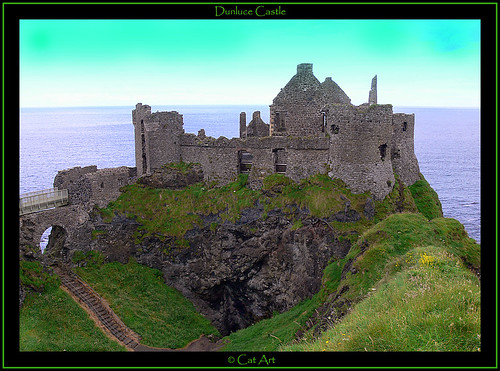
The limestone cliffs of the White Rocks ends abruptly against a dark basalt outcrop which is majestically crowned by Dunluce Castle and joined to the mainland by an arched walkway, underneath lies the ' Mermaid's Cave'. It is believed that the castle was built or (possibly) rebuilt by Richard de Burgh or one of his chief followers during the Anglo Norman period in Ireland. The site certainly was occupied as a fort before this time, a souterrain exists on the outcrop under one of the towers. The castle which has seen many additions to its original structure over the centuries gradually fell into disuse from the late 1600s' when the last occupier, Randall MacDonnell, the second Earl of Antrim moved to Ballymagarry House. In the mid 1700s the seat of the Earl's of Antrim moved to the present location of Glenarn Castle. A thriving merchant village that once surrounded the castle was destroyed by fire during 1641 when the castle was besieged by an Irish army, the outlines of some of the old walls can still be seen in the land to the west of the castle. Close by is the ancient church ruins of St. Cuthbert's named after a Northumbrian monk and the (possible) burial site of sailors and noblemen from the Spanish Armada. The most colourful occupier of Dunluce Castle was Sorley Boy MacDonnell, a Scottish chieftain whose clan established their dominance along the north coast in the mid 1500s, he had many differences of opinion with Queen Elizabeth who sent Sir John Perrottt here in 1584 to bring him to task but Sorley evaded arrest. Dunluce Castle was fought over many times in its past and it is wrapped in myths and legends. On a clear day you can look over an expanse of ocean from here to Donegal and round to Islay, a view which has remained unchanged for centuries.
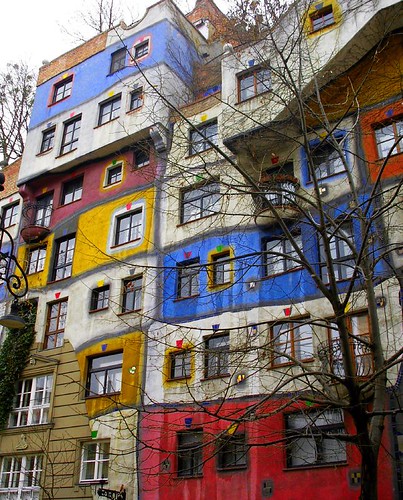
The Hundertwasser House is an apartment house in Vienna, Austria, designed by Austrian artist Friedensreich Hundertwasser. This landmark of Vienna is located in the 3. district, Kegelgasse 34-38 / Löwengasse 41-43.
The house was built between 1983 and 1986. It features undulating floors, a roof covered with earth and grass, and large trees growing from inside the rooms, with limbs extending from windows. Hundertwasser took no payment for the design of the house, declaring that it was worth it, to prevent something ugly from going up in its place.
Within the house there are 52 apartments, four offices, 16 private terraces and three communal terraces, and a total of 250 trees and bushes. The Hundertwasser House is one of Austria's most visited buildings and has become part of Austria's cultural heritage.
(Adapted from: Wikipedia)
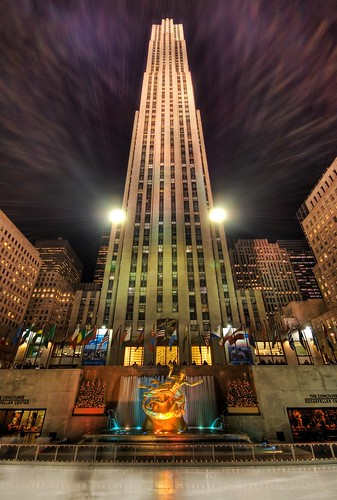
Soar 70 floors high and experience the exhilarating joy of unobstructed 360º city views from the Top of the Rock Observation Deck. From the sweeping green of Central Park to the thrilling city skyline, nowhere else can you see New York so spectacularly.
A timed-ticketing system brings you to the Top, exactly when you want. While on deck, get your picture taken by Kodak's professional team and bring home the experience
source:http://www.rockefellercenter.com/
The red telephone box, a public telephone kiosk designed by Sir Giles Gilbert Scott, is a familiar sight on the streets of the United Kingdom, Malta, Bermuda and Gibraltar, and despite a reduction in their numbers in recent years, red boxes can still be seen in many places and current or ex-British Colonies around the world. The colour red was chosen to make them easy to spot.

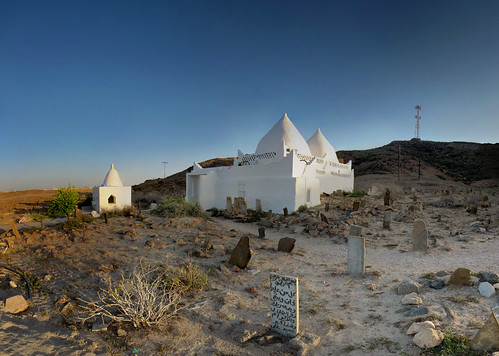
Oman’s unique story reveals examples of great moral strength, courage, heroism, maritime skills, scholarship and hard work that have together moulded the Sultanate into its present form. By drawing our attention to the noble efforts of distinguished Omanis, historians have provided us with a deeper understanding of the great wealth of human experience that is at the foundation of modern Oman.
An understanding of Oman’s place at the heart of the Middle East and its relationship with neighbouring countries is central to understanding the international position of Oman today as well as its internal dynamics.
Oman occupies the far south-eastern corner of the Arabian Peninsula, its geographical boundaries clearly defined by nature from earliest times.
The earliest Stone Age settlement discovered in Oman is in the Wattaya district and dates back more than 10,000 years.
Babylon and Assyria were among the first empires to control the Asian land trade from the Arabian Gulf to the eastern shores of the Mediterranean. Later the Persian Empire expanded to gain influence over a vast area and control the region’s trade.
The rule of the Imams in Oman began in the eighth century C.E. Ibn Masoud was elected as the first imam in 751 and his reign lasted for four centuries until 1154. The Oman of the Imams was in the Nabhan period between the thirteenth and fifteenth centuries AD; attempts to revive the Imamate in Oman were renewed in the fifteenth century but these attempts failed.
Between 1498 to 1507, after Portugal had occupied the trading ports of East Africa along with Aden, the Portuguese stranglehold, which lasted for more than a century and a half, was to fail because of Oman’s spirited resistance and the election of Imam Nasir bin Murshid to the Imamate in 1624 AD.
The Portuguese possessions in India suffered tremendously from the Omani strikes. Portuguese and Omanis engaged in bloody battles for the control of East Africa, until the entire East African shore from Mombassa to Kilwa fell under Omani control. In 1698 AD the Omanis conquered Mombassa and then entered Pemba, Zanzibar and Patta, Mozambique was the only country that resisted the Omani Arab fleet, and it stayed under Portuguese control until the twentieth century.
Despite repeated attempts from 1737-1744 AD, the Persian invasions were not to achieve their objective of subduing Oman because of the valiant resistance put up by the Omanis. Oman’s heroic resistance staved off the Persian invasion in that period and their ultimate victory is owing to the leadership of Ahmed bin Said Al-Busaidi who succeeded in ousting the Persians from Oman and was elected Imam in 1744 AD,
In 1970 His Majesty Sultan Qaboos bin Said, the Crowning Glory of Oman, inaugurated the renaissance and modern age of Oman
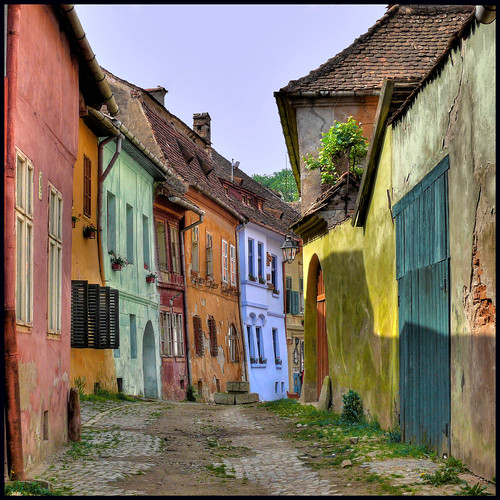
Braşov (Romanian pronunciation: [braˈʃov]; German: Kronstadt; Hungarian: Brassó; Medieval Latin: Brassovia or Corona; 1950-1960: Oraşul Stalin) is a city in Romania and the capital of Braşov County, with a population of 284,596, according to the 2002 census, is the 8th largest Romanian city.
Braşov is located in the central part of the country, about 166 km from Bucharest. It is surrounded by the Southern Carpathians, and is part of the Transylvania region.
The city is notable for hosting the Golden Stag International Music Festival.
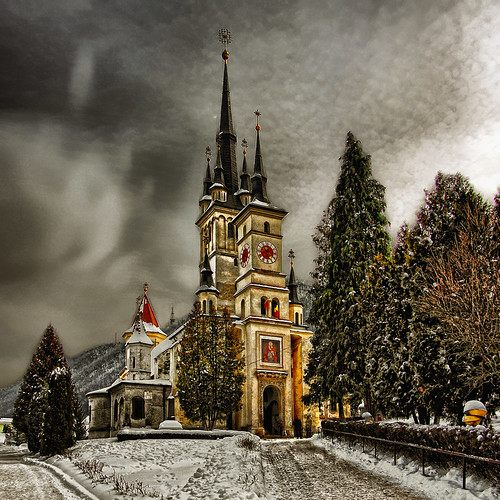
Saint Nicholas Church (Romanian: Biserica Sfântul Nicolae) is a Romanian Orthodox church in Braşov, dominating the historic district of Şchei.
The church was established in 1292. It was mentioned in a Papal bull issued in 1399 by Pope Boniface IX. Starting in 1495, the church was rebuilt in stone by the locals, with help from Vlad Călugărul, Voivode (Prince) of Wallachia. More help was provided around 1512 by Neagoe Basarab.
Initially built in the Gothic style, it was later redone in the Baroque style. It has frescoes painted by the renowned muralist Mişu Popp.
Next to St. Nicholas Church is the First Romanian School (started in 1583), and a statue of Coresi. Nearby is a cemetery, where Ioan Meşotă, Aurel Popovici, Vasile Saftu, and Nicolae Titulescu are buried.
Vaduz is the capital of the principality of Liechtenstein and the seat of the national parliament. The town, located along the Rhine, has about 5,100 inhabitants (as of 2009), most of whom are Roman Catholic. Its cathedral is the seat of a Roman Catholic archbishop.
While Vaduz is better known internationally, it is actually not the largest town in the principality: neighbouring Schaan has a greater population.
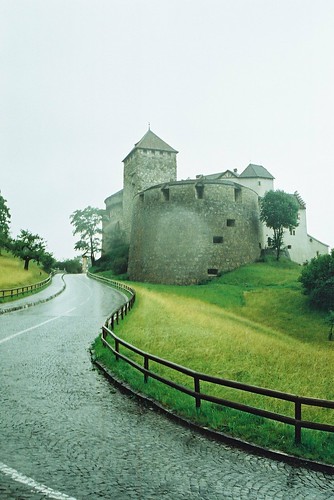
The most prominent landmark of Vaduz is Vaduz Castle, the home of the reigning prince of Liechtenstein and the Liechtenstein princely family. The castle is visible from almost any location in Vaduz, being perched atop a steep hill in the middle of the city. The Cathedral of St. Florin, Government House and City Hall are also well-known landmarks, displaying the various styles and periods of architecture that the city is known for.
Stockholm is the capital and the largest city of Sweden. It is the site of the national Swedish government, the Riksdag (parliament), and the official residence of the Swedish monarch as well as the prime minister. Since 1980, the monarch has resided at Drottningholm Palace outside of Stockholm and uses the Royal Palace of Stockholm as his workplace and official residence. As of 2009, the Stockholm metropolitan area is home to approximately 22% of Sweden's population, and contributes 28% of Sweden's gross domestic product.
Stockholm is the most populous city in Sweden with a population of 829,417 in the municipality (2009), 1.25 million in the urban area (2005), and 2 million in the metropolitan area (2009).
Founded circa 1250, Stockholm has long been one of Sweden's cultural, media, political, and economic centres. Its strategic location on 14 islands on the south-central east coast of Sweden at the mouth of Lake Mälaren, by the Stockholm archipelago, has been historically important. Stockholm has been nominated by GaWC as a global city, with a ranking of Alpha. In The 2008 Global Cities Index, Stockholm ranked 24th in the world, 10th in Europe, and first in Scandinavia. Stockholm is known for its beauty, its buildings and architecture, its abundant clean and open water, and its many parks. It is sometimes referred to as Venice of the North. Stockholm is the second most visited city in the Nordic countries, with around one million visitors in 2006.
The city's oldest section is "Gamla Stan" (Old Town), located on the original small islands of the city's earliest settlements and still featuring the medieval street layout. Some notable buildings of Gamla Stan are the large German Church (Tyska kyrkan) and several mansions and palaces: the Riddarhuset (the House of Nobility), the Bonde Palace, the Tessin Palace and the Oxenstierna Palace. The oldest building in Stockholm is the Riddarholmskyrkan from the late 13th century. After a fire in 1697 when the original medieval castle was destroyed, Stockholm Palace was erected in a baroque style. Storkyrkan Cathedral, the episcopal seat of the Bishop of Stockholm, stands next to the castle. It was founded in the 13th century but is clad in a baroque exterior dating to the 18th century.
As early as the 15th century, the city had expanded outside of its original borders. Some pre-industrial, small-scale buildings from this era can still be found in Södermalm. During the 19th century and the age of industrialization Stockholm grew rapidly, with plans and architecture inspired by the large cities of the continent such as Berlin and Vienna. Notable works of this time period include public buildings such as the Royal Swedish Opera and private developments such as the luxury housing developments on Strandvägen.
In the 20th century, a nationalistic push spurred a new architectural style inspired by medieval and renaissance ancestry as well as influences of the Jugend/Art Nouveau style. A key landmark of Stockholm, the Stockholm City Hall, was erected 1911-1923 by architect Ragnar Östberg. Other notable works of these times are the Stockholm Public Library and the Forest Cemetery, Skogskyrkogården.
In the 1930s modernism characterized the development of the city as it grew. New residential areas sprang up such as the development on Gärdet while industrial development added to the growth, such as the KF manufacturing industries on Kvarnholmen located in the Nacka Municipality. In the 1950s, suburban development entered a new phase with the introduction of the Stockholm metro. The modernist developments of Vällingby and Farsta were internationally praised. In the 1960s this suburban development continued but with the aesthetic of the times, the industrialised and mass-produced blocks of flats received a large amount of criticism.
At the same time that this suburban development was taking place, the most central areas of the inner city were being redesigned, known as Norrmalmsregleringen. Sergels Torg, with its five high-rise office towers was created in the 1960s, followed by the total clearance of large areas to make room for new development projects. The most notable buildings from this period is the ensemble of the House of Culture, City Theatre and National Bank at Sergels Torg, designed by architect Peter Celsing.
In the 1980s the planning ideas of modernism were starting to be questioned, resulting in suburbs with a denser planning, such as Skarpnäck. In the 1990s this idea was taken further with the development of and old industrial area close to the inner city, resulting in a sort of mix of modernistic and urban planning in the new area of Hammarby Sjöstad.
The municipality has appointed an official "board of beauty" called "Skönhetsrådet" to protect and preserve the beauty of the city.
Stockholm's architecture provided the inspiration for Japanese director Hayao Miyazaki as he sought to evoke an idealized city untouched by World War. His creation, called Koriko, draws directly from what Miyazaki felt was Stockholm's sense of well-established architectural unity, vibrancy, independence, and safety.
One of the most unusual pieces of "architecture" in Stockholm is the Jumbohostel, housed in a converted Boeing 747 located at Stockholm-Arlanda Airport.
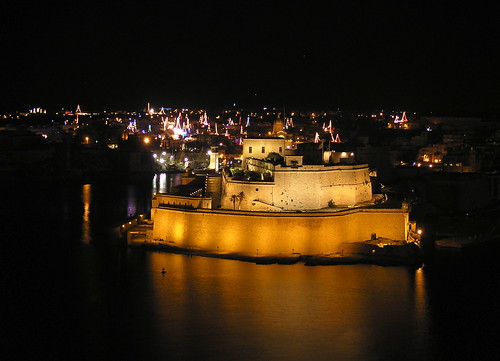
The date of its original construction is unknown and may date back to Roman times. It certainly existed in the early medieval period. The remains of a tower that may date back to the 11th century when Malta was under Arab control can be traced among the more recent works. From the 14th century the Maltese Islands were under Aragonese rule and the fortification was known as Castello a Mare (Castle by the sea) and it was home to the powerful Nava family, feudal lords of the island.
When the the Knights of Malta arrived in Malta in 1530, they chose to settle in Birgu, and Fort St Angelo became the seat of the Grand Master. The Knights made this their primary fortification and substantially reinforced and remodelled it. Fort St Angelo withstood the Turks during the Siege of Malta, though in the aftermath of that siege the Knights built the fortified city of Valletta on Mount Sciberras across the other side of Grand Harbour, and the administrative centre for the knights moved there.
With the coming of the British to Malta the fort retained its importance as a military installation, and the fort was listed as a ship, originally in 1912 as HMS Egremont, but in 1933 renamed as HMS St Angelo. When the Royal Navy left Malta in 1979 the Fort was handed to the Maltese government and since then parts of the Fort have fallen into a state of disrepair.
Today some parts of the fort are leased to the Order of the Knights of St John. Other parts are used as a maritime Museum and most recently commercial development has taken place along the quayside.
The fortification has also undergone some recent repair, though not all parties seem to view this as having been done sympathetically to the site.