Showing posts with label NIGHT LIFE. Show all posts

Sunday, September 19, 2010

New Orleans' French Quarter: A novel place, still

New Orleans' French Quarter: A novel place, still

Literary New Orleans

William Faulkner's home during the 1920s is now a bookshop. (Jay Jones)

Reporting from New Orleans —

Despite its name, Tennessee Williams' "A Streetcar Named Desire" isn't a play so much about a geographic destination — Desire Street — as a place in the heart. In the Crescent City, both perspiration and sensuality still ooze from the pores, despite the scars from 2005's Hurricane Katrina.

The curious mix is as palpable for today's visitors as it was for the various famous writers who once lived and worked in the Vieux Carré. The character — and characters — who inspired literary greats such as Williams and William Faulkner remain, as do the houses in which the men toiled amid the city's sounds, smells and — of course — oppressive heat.

The charming, now-famous neighborhood would be unrecognizable to its earlier residents. Before a pricey transformation into a tourist district after World War II, the French Quarter was an urban slum not much different from other poor areas of New Orleans.

"This was a dump. The whole French Quarter was a dump," notes Joanne Sealy, the literary expert who runs the appropriately named Faulkner House Books, a tiny shop on the ground floor of the narrow house in which the author lived during the 1920s.

Places to visit

Faulkner House Books: 624 Pirates Alley, between Royal and Chartres streets in the French Quarter; (504) 524-2940, http://www.wordsandmusic.org

Williams' apartment: 632 St. Peter St. A plaque marks the home in which Tennessee Williams wrote "A Streetcar Named Desire" in 1946.

The French Quarter: best savored on foot. Besides walking tours, horse-drawn carriage rides also provide informative journeys through the narrow streets.

The St. Charles streetcar: a good way for visitors to rest their weary feet while enjoying a trip from Canal Street to Uptown, past stately homes and Loyola and Tulane universities.

New Orleans Metropolitan Convention and Visitors Bureau: (800) 672-6124, neworleanscvb.com

"It was a small boarding house, four stories, a rabbit's warren," Sealy adds.

In a letter to his mother, Faulkner wrote, "I have a whole floor. Two rooms, a court [yard], and a kitchen." The shared bathroom was — and still is — up a steep flight of stairs.

"This really was the place to be in the '20s if you couldn't go to Paris," Sealy says of the French Quarter. "Prohibition didn't mean boo."

From the front of his flat in Orleans Alley — city fathers renamed it Pirates Alley in the '40s to add what Sealy calls "pizazz" — Faulkner could look out onto what remains the city's most famous landmark: the towering St. Louis Cathedral. Jackson Square was only steps away. The park remains the bohemian gathering spot it was in Faulkner's day, although the surrounding streets now are home to trendy boutiques and restaurants instead of bleak warehouses.

Sure, visitors can buy the latest bestseller at the bookshop. But it's better known as a repository for exhaustive collections of the works of Faulkner and Williams, who during the 1940s lived just one block away on St. Peter Street. Some of their first editions are under lock and key in an adjoining hallway.

"The only [Faulkner] first edition I don't currently have is 'Absalom, Absalom!'" Sealy tells a potential customer over the phone. "That runs about $3,500."

The well-read bookseller says Faulkner's works often convey an indomitable human spirit — not unlike that of the people who have rebuilt in the wake of the hurricane and the events that followed.

"He points out the mistakes we've made," she observes. "His characters face unimaginable trials and tribulations but keep getting up again."

If Faulkner's novels are analogous to man's basic goodness, Williams' plays reflect a grittier reality. In his Pulitzer Prize-winning "Streetcar," a modern tragedy unfolds through the often-bleak existences of Stanley, his wife, Stella, and her older sister, the libidinous and, alas, mentally ill Blanche.

"What you are talking about is brutal desire — just — Desire! — the name of that rattle-trap street-car that bangs through the Quarter," Blanche DuBois intones in "Streetcar."

Three lines still clatter through New Orleans, but the streetcars no longer run to Desire Street, with its gaily painted small homes. Desire Street is in the 9th Ward, but it escaped the worst of Katrina's fury. Nonetheless, at the height of a muggy and oh-so-real modern tragedy, muddy floodwaters rose over the sidewalks at some intersections, obscuring the aging ceramic tiles that spell D-E-S-I-R-E. And like a character in a Faulkner novel, this city keeps getting back up again.

travel@latimes.com


Monday, June 14, 2010

5 "HOT Summer" Deals

Go island hopping in Greece, stay at a beachfront hotel in Bali, plus three more discounted getaways around the world.
All prices are per person and, if lodging is a component of the package, based upon two people traveling together (unless otherwise noted). The prices listed are general starting rates; see "What Else You'll Have to Pay" for details about associated taxes and fees. Base-prices, taxes, and fees can vary based on point of departure and time of travel. Trip add-ons like sightseeing tours and meal plans may also increase the price. Check with the tour operator for additional gateways and any single supplements, which is the extra cost that a solo traveler would pay to book the deal.


Photo Caption: The waterfront in Mykonos, Greece.
Photo by Helen Weismeyer/Frommers.com Community


Read more: Frommer's 5 Deals for June 9, 2010 Slideshow at Frommer's

"A journey of a thousand miles must begin with a single step." -- Lao Tzu Copyright © Demetrios the Traveler

Sunday, May 9, 2010

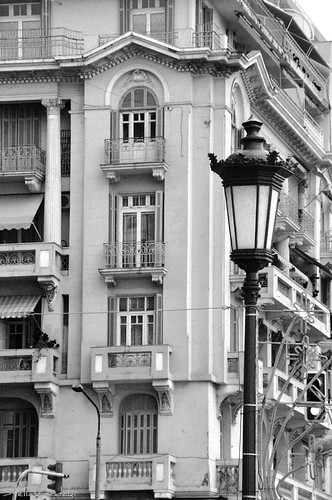
Τhessaloniki, Macedonia, Greece


thessaloniki, originally uploaded by stella_v ❤.

Thessaloniki (Greek: Θεσσαλοnίkh, IPA: [θesaloˈnici]), Thessalonica, or Salonica is the second-largest city in Greece and the capital of Macedonia. Its honorific title is Συμпpωτεύουσα (Symprotévousa), literally "co-capital", a reference to its historical status as the Συμβασiλεύουσα (Symvasilévousa) or "co-reigning" city of the Byzantine Empire, alongside Constantinople. According to the 2001 census, the municipality of Thessaloniki had a population of 363,987, its Urban Area 800,764 and the Larger Urban Zone (LUZ) of Thessaloniki has an estimated 995,766 residents (2004).
Thessaloniki is Greece's second major economic, industrial, commercial and political centre, and a major transportation hub for the rest of southeastern Europe; its commercial port is also of great importance for Greece and its southeast European hinterland. The city hosts an annual International Trade Fair, the Thessaloniki International Film Festival, and the largest bi-annual meeting of the Greek diaspora.
Thessaloniki is home to numerous notable Byzantine monuments, including the Paleochristian and Byzantine monuments of Thessalonika, a UNESCO World Heritage Site, as well as several Ottoman and Sephardic Jewish structures.
the above from wikipedia
=====================================================
History of Thessaloniki

315 B.C. Thessaloniki founded by King Cassander of Macedonia.
The city soon became the commercial and cultural center of Macedonia and of the Balkan peninsula.
168 B.C. The Romans make Thessaloniki the capital of the Roman province of Macedonia and the Southern Balkans.
The construction of the famous Via Egnatia together with the city's harbor contributes to Thessalonica's growth and prosperity.
395A.D. Founding of the Byzantine Empire. Thessaloniki is proclaimed "coregent" with Constantinople.
The city takes on a Byzantine character which it has maintained to the present day, with more (and more significant)
Byzantine monuments than any other city in Europe.
1430 Thessaloniki is occupied by the Turks.
After a period of economic and cultural stagnation, the city begins to exploit the reforming tendencies
of the Ottoman Empire and becomes once again a commercial and cultural beacon for the peoples of the Balkans.
1912 Thessaloniki is liberated by the Greek army on the feast day of its patron saint, Aghios Demetrios.
It soon enters a new period of rapid economic and cultural growth.
1994 Thessaloniki is one of the major metropolitan centers in the Mediterranean basin.
1997 Thessaloniki: The Cultural Capital of Europe.

Thessaloniki, which is one of the few Greek cities to have experienced constant cultural development, has continuously played a significant role in both Greek and world history. For over 4000 years, from the 3rdmillenium B.C. up to the present day, Thessaloniki has been a city which has attracted the interest of both specialists and the general public. Visitors to the city can enjoy the combination of aesthetic delight, historical and archaeological knowledge and natural beauty.
When king Cassander of Macedonia founded Thessaloniki in 315 B.C, on the site of the Ancient Greek town of Therme, joining 26 townships at the head of the gulf bearing the same name, he named the city after his wife, the half-sister of Alexander the Great. The city subsequently gained the reputation of being "Mother of all Macedonia", a commercial centre possessing connections with all the ports of the East, its own coinage and a cultural development equal to that of the other Greek cities.
A "Free City" during the Roman era, linked to the East and the West by the Via Egnatia(l30 B.C.) it preserved the Greek language and its ethnic integrity, developing into the most populous city in Macedonia with the most important monuments, which continue to adorn it.
In Thessaloniki in 50 A.D. the Apostle Paul founded the second Christian church on the European continent and sent it his "Epistles to the Thessalonians".
Joint capital of the Byzantine Empire and cradle of the Christian faith and Greek culture, Thessaloniki was the "eye of Europe and particularly of Greece". Thessaloniki still preserves outstanding monuments which are characteristic of Byzantine art from the 5th until the 14th century A.D. The artistic, intellectual and religious influence it exerted contributed decisively to the development of the Balkan peoples, who were converted to the Christian faith by the Thessalonian theologians Cyril and Methodius (863) A.D.)
The cult of Saint Demetrius, the city's patron saint, spread all over the Balkans.
During the long period of Turkish rule (1430-1912) and despite the terrible acts of destruction it suffered, Thessaloniki retained its moral and ethnic strength, which the city had inherited from its age-old culture, and after constant struggles and sacrifices succeeded in regaining its freedom.
The capital of Macedonia, and a commercial, industrial and spiritual centre of international importance, the modem city of Thessaloniki can satisfy the demands of any visitor.
One can get on overall picture of the history of Macedonia, and more particularly of Thessaloniki, by visiting the Archaeological Museum; the largest in Macedonia. It has existed in its present form since 1961, and its galleries are continuously being enriched with finds dating from prehistoric times up to the early Christian era. The Derveni, Sindos and Vergina galleries, with their exhibits of unrivalled artistry and importance are famous throughout the world. The Ethnological and Folk Art Museum, which was established in 1931 and has been running since 1947, as well as the Museum of the Macedonian Struggle, enable the visitor to get to know the art and history of recent times, the traditional architecture which Greek artisans spread all over the Balkans, and the evidence of the glorious struggles which were waged for the liberation of Macedonia.
A tour of the city will also give the tourist a comprehensive picture of the city's historic past. One should start at the Ramparts which in their present form extend over 3 kilometers and include 6 towers. the main one of which is the White Tower - the symbol of Thessaloniki. Then one should make one's way to the Galerius complex, which dates back to the 4th century A.D.). with the triumphal arch, the palace and the Rotunda, then to the Ancient Roman Agora and the Odeon, and finally to the churches, magnificent examples of early Christian and Byzantine art.
The city of Thessaloniki today, possessing as it does the second largest and most important port in Greece, the International Fair - which attracts commercial interest from all over the world- and the largest university in the country, and offering cultural events, theaters, Modern Art galleries, libraries, some of the most exclusive spores in Greece, an immense variety of high standard recreational facilities and examples of modern architecture, art nouveau and eclecticism, offers the visitor an exciting experience.

the above from: http://www.macedonia.info


"A journey of a thousand miles must begin with a single step." -- Lao Tzu Copyright © Demetrios the Traveler

Saturday, May 8, 2010

Moulin Rouge, Paris - France


, originally uploaded by P•A•U•L | Photography.

Carefree life, Flickleness and Joie de Vivre... Those are the three words that could best sum up this unique period in the History of France. It was a rest between two wars, a period of transition between two centuries, during which the social barriers collapsed, when the industrial revolution gave hope of a better life for all, in a rich cultural profusion and that promised much fun.
The middle-class mixed with the riffraff, the popular culture was enchanced in a contented disorder full of joy and vitality. In that atmosphere, which favoured artistic creativity, literary circles appeared and disappeared according to people'meetings, while painters and drawers got especially inspired by this joyful sometimes outrageous but full of fancy atmosphere that broke completely with the rigid classicism of that period.
The Japonism *, a movement of Far-East inspiration using influences from the Japanese style in French Art, was at its height. Toulouse-Lautrec and his famous Japanese engravings was one of the most famous disciples of that time. The atmosphere fitted perfectly to the appearance of the first cabarets, such as the Moulin Rouge in 1889.
the above and more, from:
http://www.moulinrouge.fr/home-flash-gb.html


"A journey of a thousand miles must begin with a single step." -- Lao Tzu Copyright © Demetrios the Traveler

Saturday, April 17, 2010

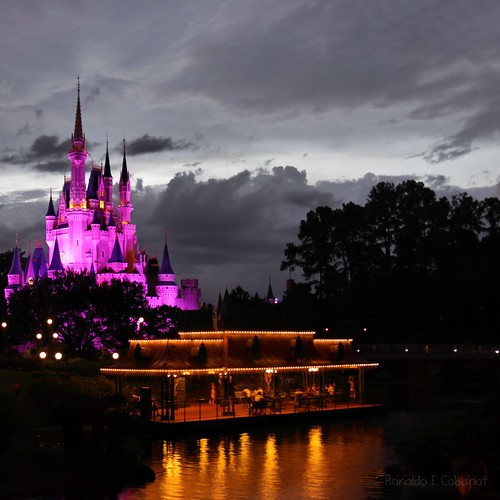
Magic Kingdom® Park, Florida USA


Magic Kingdom theme park, one of 4 Theme Parks in Walt Disney World Resort, captures the enchantment of fairy tales with exciting entertainment, classic attractions, backstage tours and beloved Disney Characters.

Designed like a wheel with the hub in front of Cinderella Castle, pathways spoke out across the 107 acres of Magic Kingdom theme park and lead to these 7 whimsical lands:

Main Street, U.S.A.® area
Adventureland® area
Frontierland® area
Liberty Square
Fantasyland® area
Mickey's Toontown® Fair area
Tomorrowland® area
Travel through these lands and see how fantasy becomes reality when you learn how to be a pirate, match wits with funny monsters and conquer mountains. Get swept up in the spectacle of splendid parades and fireworks shows at Magic Kingdom theme park—it's here that dreams come true for children of all ages.

The Pirates League

The Pirates League: Transform yerself from a land lubber into a true buccaneer!

Bibbidi Bobbidi Boutique

Bibbidi Bobbidi Boutique: A beauty salon where little girls are transformed into precious princesses.

Guest Services

Guest Services at Magic Kingdom theme park is a list that includes some of the benefits to Guests staying at a Walt Disney World Resort hotel, where to find ATMs, what attractions use the FASTPASS ticket system, where to find Disney merchandise and where to get a haircut.

Attractions

Attractions at Magic Kingdom theme park consist of classic experiences that pay tribute to Walt Disney's concepts and designs. Celebrate adventure, fantasy, the past, the future and the imagination. Use Disney's FASTPASS system on popular attractions to reduce wait times.

Entertainment

Entertainment at Magic Kingdom theme park includes parades, musical stage shows, spectacular nighttime fireworks performances and the chance to meet princes, princesses, heroes and popular Disney Characters. For show schedules, check the Park calendar or Times Guide.

Dining

Dining at Magic Kingdom theme park means sharing meals with Disney Princesses and other Characters. Or grab a fast snack at a quick-service restaurant. Breakfast, lunch and dinner from less than $15 to $60 per person, based on average Guest check, not including tax and tip.

Shopping

Shopping at Magic Kingdom theme park means exploring the enormous Emporium store and strolling through the numerous shops on Main Street, U.S.A. Find gifts, souvenirs, Disney Character apparel, Pal Mickey, pins and pirate and princess accessories.

Tours

Tours at Magic Kingdom theme park travel through secret areas of the Park. See the steam trains up close, go on a quest to conquer Villains, get highlights of Disney history—or let a team of Disney-trained vacation planning professionals personalize a tour for you!

Special Events

Special Events at Magic Kingdom theme park include Mickey's Not-So-Scary Halloween Party and Mickey's Very Merry Christmas Party.

Calendars

Calendars for Magic Kingdom theme park display Park hours, Extra Magic Hours, operational updates, entertainment and special events.

Transportation

Transportation to and from Magic Kingdom theme park is available via monorail, bus and boat throughout Walt Disney World Resort, and is complimentary for Walt Disney World Resort hotel Guests. For Park Guests choosing to drive, convenient self-parking is also available.

Walt Disney World Resort

Disney's Animal Kingdom theme park
Disney's Hollywood Studios theme park
Epcot theme park
Magic Kingdom theme park
Disney's Typhoon Lagoon Water Park
Disney's Blizzard Beach Water Park
Disney's BoardWalk Area
Downtown Disney Area
ESPN Wide World of Sports Complex
Disney Resort hotels

"A journey of a thousand miles must begin with a single step." -- Lao Tzu
Copyright © Demetrios the Traveler


Sunday, November 8, 2009

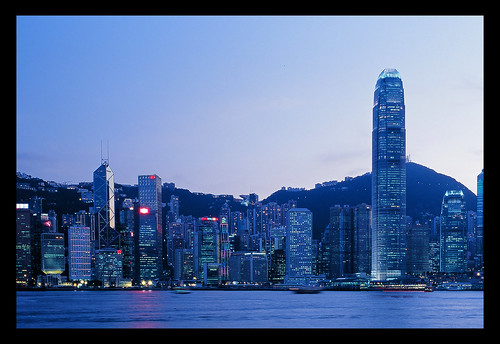
Hong Kong Victoria Harbour,China


01160021, originally uploaded by d-k-t.
Victoria Harbour is a natural landform harbour situated between Hong Kong Island and the Kowloon Peninsula in Hong Kong.
The harbour's deep, sheltered waters and strategic location on the South China Sea was instrumental in Hong Kong's establishment as a British colony and its subsequent development as a trading centre.
Throughout its history, the harbour has seen numerous reclamation projects undertaken on both shores, but still retains its founding role as a port for thousands of international vessels each year.

Long famous for its spectacular views, the harbour is a major tourist attraction of Hong Kong.
Lying in the middle of the territory's dense urban region, the harbour is the site of annual fireworks displays and its promenades are popular gathering places for tourists and residents.

here:Hong Kong Victoria Harbour, viewed from Tsim Sha Tsui.
The time is after sunset.

"A journey of a thousand miles must begin with a single step." -- Lao Tzu
Copyright © Demetrios the Traveler

readers

labels and tags

Powered By Blogger