Showing posts with label TRAVEL TIPS. Show all posts

Thursday, February 9, 2012

Tenuta di Spannocchia, Tuscany, Italy

Tenuta di Spannocchia is 12th-century organic agricultural estate and educational center located just outside Siena, in central Tuscany. Spannocchia hosts a residential farm internship program and education/enrichment programs focused on Tuscan culture and history for students and adults. Learn more about our efforts to encourage global dialogue about sustaining cultural landscapes for future generations by visiting spannocchia.org
"A journey of a thousand miles must begin with a single step." -- Lao Tzu Copyright © Demetrios the Traveler

Wednesday, December 28, 2011

visit #greece Infographic 2011


ΘΕΜΑ: Στοιχεία και αριθμοί για το 2011:
To VisitGreece.gr και η συνεχόμενα ανοδική πορεία του στο χώρο των μέσων κοινωνικής δικτύωσης
Από τις αρχές του 2010, το www.visitgreece.gr, το επίσημο site προβολής της χώρας μας ως τουριστικός, και όχι μόνο, προορισμός, διαγράφει μια επιτυχημένη πορεία στο χώρο των μέσων κοινωνικής δικτύωσης, με σημαντική παρουσία σε FacebookYouTube και Flickr
Το φθινόπωρο του 2010, προστίθεται στη λίστα των καναλιών προβολής μας και το Twitter.
Από το φθινόπωρο του 2011, επεκτείνουμε τη δραστηριότητά του αυτή στο Foursquare - που δίνει τη δυνατότητα στο χρήστη να εξερευνήσει την Ελλάδα, κάνοντας check in σε εκπληκτικά μέρη και προορισμούς - αλλά και στο Google+, μέσα από το οποίο μπορεί να μοιραστεί φωτογραφίες, βίντεο, συμβουλές αλλά και χρήσιμες πληροφορίες που φωτίζουν τις μοναδικές ομορφιές της χώρας μας.
 Μέσα σε σύντομο σχετικά χρονικό διάστημα και έπειτα από μια αξιοσημείωτη, ανοδική πορεία, καταφέραμε να χτίσουμε μια αμφίδρομη, διαδραστική σχέση με το κοινό, να αναπτύξουμε μια προσωπική επαφή με κάθε επισκέπτη ξεχωριστά, αλλά και να δημιουργήσουμε μια χρηστική πλατφόρμα επικοινωνίας, προσιτή στους δυνητικούς επισκέπτες.
 Για αυτό, φιλοδοξία του Visit Greece είναι να διευρύνει ακόμα περισσότερο τον κύκλο των ανθρώπων που αγαπούν την Ελλάδα και αγκαλιάζουν τη δράση του επίσημου site του Ελληνικού Οργανισμού Τουρισμού, όπως επαγγελματίες ταξιδιωτικοί συντάκτες, travel bloggers αλλά και Έλληνες πολίτες, που με τη σειρά τους θα λειτουργήσουν ως πρεσβευτές της προσπάθειας για την προώθηση της χώρας μας ως μοναδικό τόπο εμπειριών, για κάθε εποχή του χρόνου.
Στην προσπάθεια αυτή λοιπόν, είναι αναγκαίο να συμβάλουμε όλοι, κάθε Έλληνας και κάθε Ελληνίδα. Να αγκαλιάσουμε το επίσημο site μας και τα κανάλια προβολής μας σε όλα τα κοινωνικά μέσα. 
Σας καλούμε να ισχυροποιήσετε την παρουσία του www.visitgreece.gr, κάνοντας followlike+1, και να διαδώσετε το μήνυμα για την προβολή της χώρας μας παντού.
 Στο infographic που θα βρείτε συνημμένο θα έχετε την ευκαιρία να δείτε αναλυτικά την πορεία του www.visitgreece.gr στα μέσα κοινωνικής δικτύωσης για το 2011, αλλά και το περιεχόμενο, τα posts, tweets, photos, videos και tips που αγαπήθηκαν περισσότερο από όλο τον κόσμο που μας παρακολουθεί.
Από Γραφείο Επικοινωνίας
Ελληνικού Οργανισμού Τουρισμού


Infographic 2011, originally uploaded by Visit Greece.

Monday, October 17, 2011

How to Stay Healthy When Traveling


Nothing ruins a holiday more than getting sick. While some illnesses are largely unpreventable, being aware of the risks and taking a few precautions before you go can make all the difference. Here are a few basic tips for staying healthy on the road.
Photo by: Gustey.com

Before you go

Research your destination. Are you traveling to a yellow fever zone? Is there a high risk of an infectious disease? Will you be at risk of altitude sickness? The best source of information on traveler’s health is the Centers for Disease Control (CDC) website. If you are still not sure, visit your local doctor. Make sure you do your research several weeks before your leave date as you may require a course of vaccinations. Also, if you’ve been putting off that trip to the dentist, now may be a good time to go!

Packing

A basic first-aid kit is a must. Essentials include band-aids, antiseptic wipes, iodine/antiseptic cream, painkillers, insect repellent, sun cream and any prescription drugs you may be using. You may also want to consider bandages, water purifying tablets, anti-malarials, anti-diarrheal, vitamins and oral hydration sachets. The more health risks your destination and activities pose, the bigger your first aid kit should be!

On the Road

Get lots of rest!
Get lots of rest!
Before you freak out, cancel your plane ticket and refuse to leave the house, take heart, there are a few easy ways of staying healthy while you’re away.
  • Plan your itinerary to give yourself time to adjust to a new place and recover from jet lag. This particularly applies if you are traveling to a high altitude!
  • Be aware of how a change in climate may affect your particular health condition and plan accordingly
  • Make sure you have enough of your own prescription medication to last your trip and pack it in your hand luggage. Keep it in its original packaging to avoid delays at the airport
  • Pack as lightly as possible and be careful when lifting your luggage
  • Be aware of the dangers of the sun – take a hat and high-factor sun cream
  • Stay hydrated. If local water poses a risk, drink bottled water and don’t have drinks with ice
  • Trust your instinct when eating at stalls or restaurants – if they look dodgy they probably are.  It may be prudent to avoid meat and rice if eating at dodgy restaurant is unavoidable!
  • Strengthen your immune system: eat healthily, get enough sleep and exercise
  • Clean cuts well
  • Wash your hands when possible
  • Avoid mosquito prone areas if you can. Cover up, use repellent and a mosquito net when sleeping
  • If bitten by an animal, wash wound well with soap and water and seek medical advice immediately.
  • Take a rain jacket
  • Practice safe sex
  • Get health insurance!
Hope these tips help you stay safe and healthy on your next trip!
Emma McMahon


"Ποταμοῖς τοῖς αὐτοῖς ἐμβαίνομέν τε καὶ οὐκ ἐμβαίνομεν, εἶμέν τε καὶ οὐκ εἶμεν.""We both step and do not step in the same rivers. We are and are not."Heraclitus the Riddler

Monday, September 12, 2011

Welcome to EF Dublin

"A journey of a thousand miles must begin with a single step." -- Lao Tzu Copyright © Demetrios the Traveler

Sunday, June 6, 2010

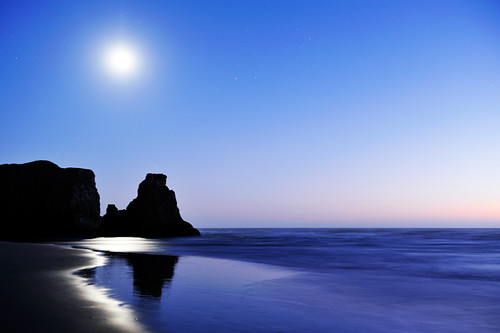
*Placid, Oregon, USA


Placid, originally uploaded by Tomaocron.
*placid [ˈplæsɪd]
adj
having a calm appearance or nature
[from Latin placidus peaceful; related to placēre to please]
=========================
Oregon is a state in the Pacific Northwest region of the United States. It is located on the Pacific coast, with Washington to the north, California to the south, Nevada on the southeast and Idaho to the east. The Columbia and Snake rivers delineate much of Oregon's northern and eastern boundaries respectively.
The area was inhabited by many indigenous tribes before the arrival of traders, explorers and settlers who formed an autonomous government in Oregon Country in 1843; the Oregon Territory was created in 1848, and Oregon became the 33rd state on February 14, 1859. Salem is the state's capital and third-most-populous city; Portland is the most populous. Portland is the 30th-largest U.S. city, with a population of 582,130 (2009 estimate) and a metro population of 2,241,841 (2009 estimate), the 23rd-largest U.S. metro area.
The valley of the Willamette River in western Oregon is the most densely populated and agriculturally productive region of the state, and is home to eight of the ten most populous cities. Oregon's 2000 population was about 3.5 million, a 20.3% increase over 1990; it is estimated to have reached 3.8 million by 2008. Oregon's largest for-profit private employer is Intel, located in the Silicon Forest area on Portland's west side.
The state has 199 public school districts, with Portland Public Schools as the largest. There are 17 community colleges, and seven publicly financed colleges in the Oregon University System. Oregon State University in Corvallis and the University of Oregon in Eugene are the two flagship universities of the state, while Portland State University has the largest enrollment.
Major highways include Interstate 5 which runs the entire north-south length of the state, Interstate 84 that runs east-west, U.S. Route 97 that crosses the middle of the state, U.S. Route 101 that travels the entire coastline, and U.S. Route 20 and U.S. Route 26 that run east-west, among many other highways. Portland International Airport is the busiest commercial airport in the state and is operated as part of the Port of Portland, the state's busiest port. Rail service includes Union Pacific Railroad and BNSF Railway freight service, Amtrak passenger service, as well as light rail and street car routes in the Portland metro area.
Oregon enjoys a diverse landscape including a scenic and windswept Pacific coastline, the volcanoes of a rugged and glaciated Cascade Mountain Range, dense evergreen forests, and high desert across much of the eastern portion of the state. The towering Douglas firs and redwoods along the rainy Western Oregon coast provide a dramatic contrast with the lower density and fire prone pine tree and juniper forests covering portions of the Eastern half of the state. The eastern portion of the state also includes semi-arid scrublands, prairies, deserts, and meadows. These drier areas stretch east from Central Oregon. Mount Hood is the highest point in the state at 11,249 feet (3,429 m). Crater Lake National Park is the only national park in Oregon. Oregon is the United States' leader in forest fires[citation needed]; in 2007 the state had more than 1,000 of them.

more @: http://en.wikipedia.org/wiki/Oregon

"A journey of a thousand miles must begin with a single step." -- Lao Tzu Copyright © Demetrios the Traveler

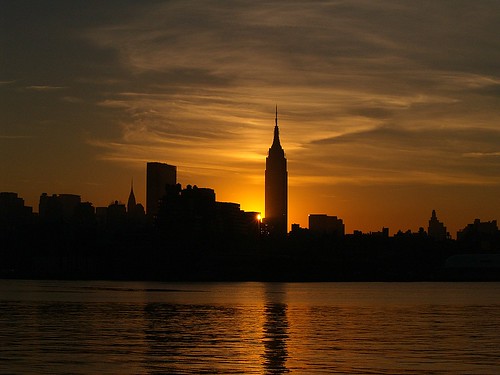
Suns up, all about NYC, USA


Suns up, originally uploaded by pmarella.

all about New York

http://www.december.com/places/nyc/blue.html

"A journey of a thousand miles must begin with a single step." -- Lao Tzu Copyright © Demetrios the Traveler

Tuesday, May 25, 2010

Egeskov Castle, Funen, Denmark.


Egeskov Castle 121, originally uploaded by pixelediting.

Egeskov's history dates to the 14th century. The castle structure was erected by Frands Brockenhuus in 1554.
Due to the troubles caused by the civil war known as the Count's Feud (Danish: Grevens fejde), general civil unrest, and a civil war introducing the Protestant Reformation, most Danish noblemen built their homes as fortifications. The castle is constructed on oaken piles and located in a small lake with a maximum depth of 5 meters (16 ft). Originally, the only access was by means of a drawbridge. According to legend, it took an entire forest of oak trees to build the foundation, hence the name Egeskov (“oak forest”)
The castle consists of two long buildings connected by a thick double wall, allowing defenders to abandon one house and continue fighting from the other. The double wall is over one meter thick and contains secret staircases and a well. Defenders were able to attack an enemy's flanks from the two round corner towers. Other medieval defences include artillery ports, scalding holes and arrow slits. The bricks composing the castle are of an oversized medieval type sometimes called "monks bricks". The conical towers are constructed in a series of separate panels.
The architecture includes depressed and round-arched windows, round-arched blank arcading within the gables, and a double string course between the high cellar and the ground floor. The structure contains some of the early indoor plumbing design first used in Europe with vertical shafts for waste. The thick double wall also contains a water well which is accessed from the servants kitchen in the east house. Several of the large rooms have massive parallel exposed beams with some end carving.

source: http://en.wikipedia.org/wiki/Egeskov_Castle


"A journey of a thousand miles must begin with a single step." -- Lao Tzu Copyright © Demetrios the Traveler

Sunday, May 23, 2010

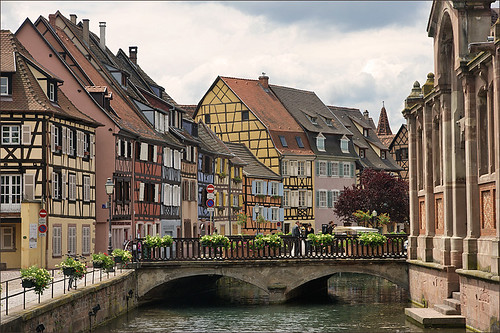
Colmar, Alsace, France

Place des Dominicains in Colmar

Colmar is a commune in the Haut-Rhin department in Alsace in northeastern France.
Colmar is 64 kilometers south-southwest of Strasbourg on the Lauch River, directly to the east of the Vosges Mountains. It is connected to the Rhine by a canal.
It is situated along the Alsatian Wine Route and considers itself to be the "Capital of Alsatian Wine" (capitale des vins d'Alsace).
Colmar has a sunny microclimate and is the driest city in France, with an annual precipitation of just 550 mm, making it ideal for Alsace wine.
Colmar's secular and religious architectural landmarks reflect eight centuries of Germanic and French architecture and the adaptation of their respective stylistic language to the local customs and building materials (pink and yellow Vosges sandstone, timber framing). The medieval centre of this historic town has fine overhanging timber-framed buildings, dating from the 16th and 17th centuries, a dream for the keen photographer.
The area crossed by canals of the river Lauch, and which formerly served as the butcher's, tanner's and fishmonger's quarter, is now called "little Venice" (Petite Venise). Picturesque colourful timber framed houses were built to both sides of the small river La Lauch.
Many tourists visit the town


"A journey of a thousand miles must begin with a single step." -- Lao Tzu Copyright © Demetrios the Traveler

Saturday, May 8, 2010

Moulin Rouge, Paris - France


, originally uploaded by P•A•U•L | Photography.

Carefree life, Flickleness and Joie de Vivre... Those are the three words that could best sum up this unique period in the History of France. It was a rest between two wars, a period of transition between two centuries, during which the social barriers collapsed, when the industrial revolution gave hope of a better life for all, in a rich cultural profusion and that promised much fun.
The middle-class mixed with the riffraff, the popular culture was enchanced in a contented disorder full of joy and vitality. In that atmosphere, which favoured artistic creativity, literary circles appeared and disappeared according to people'meetings, while painters and drawers got especially inspired by this joyful sometimes outrageous but full of fancy atmosphere that broke completely with the rigid classicism of that period.
The Japonism *, a movement of Far-East inspiration using influences from the Japanese style in French Art, was at its height. Toulouse-Lautrec and his famous Japanese engravings was one of the most famous disciples of that time. The atmosphere fitted perfectly to the appearance of the first cabarets, such as the Moulin Rouge in 1889.
the above and more, from:
http://www.moulinrouge.fr/home-flash-gb.html


"A journey of a thousand miles must begin with a single step." -- Lao Tzu Copyright © Demetrios the Traveler

Wednesday, March 31, 2010

Cyprus a place to discover


"A journey of a thousand miles must begin with a single step." -- Lao Tzu
Copyright © Demetrios the Traveler


Alaska wilderness, USA


"A journey of a thousand miles must begin with a single step." -- Lao Tzu
Copyright © Demetrios the Traveler


Friday, March 26, 2010

Japan the strange country


Japan-The Strange Country (English ver.) from Kenichi on Vimeo.
This is my final thesis project. I created info-graphic, motion piece. My objective is to make Japanese people to think about that everything happening here in Japan, isn't that normal. So I created this video from foreigner's point of view, rather than Japanese people's point of view.


Both English and Japanese versions are available.


By the way, please don't call me racist, because I am one of short, small eyes Japanese ;P


大学の卒業制作で制作した映像です。(英語版)

日本で生活していると、当たり前すぎて気づかない「不思議な事実」を、海外で生活した経験も生かし、外国人の視点から統計とともに映像化しました。

笑いつつも、「なんか不思議だな」と考えてもらえれば幸いです。

日本語版と英語版があります。


"A journey of a thousand miles must begin with a single step." -- Lao Tzu
Copyright © Demetrios the Traveler


Thursday, March 18, 2010

Vacation Planner 2010

Check out this SlideShare Presentation: "A journey of a thousand miles must begin with a single step." -- Lao Tzu
Copyright © Demetrios the Traveler


Adventures of a travelling blogger

Check out this SlideShare Presentation:
"A journey of a thousand miles must begin with a single step." -- Lao Tzu
Copyright © Demetrios the Traveler


Thursday, July 23, 2009

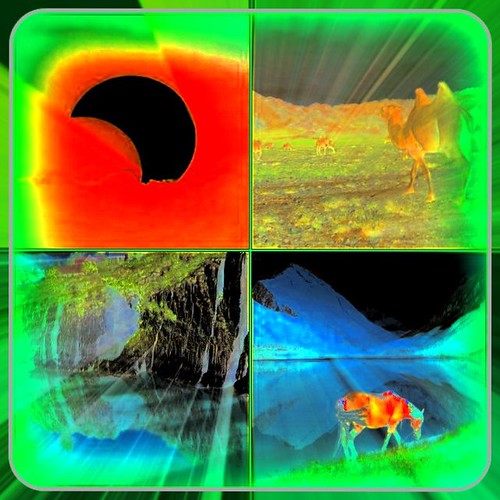
eclipse fantasy!

just to say a hello to you all...see you in few days!


"A journey of a thousand miles must begin with a single step." -- Lao Tzu
Copyright © Demetrios the Traveler


Digg!


Friday, July 3, 2009

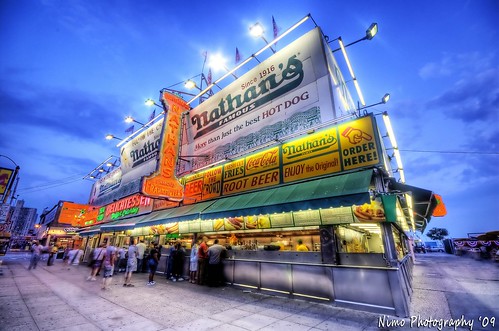
Nathan's Famous Franks, We are Still HERE BROOKLYN !


I cant lie, this is one of my favorite places to eat. I try to stay away as much as possible. Very expensive and no good for your health.But once in a while wont hurt. Much of Coney Island is gone, but Nathan's still remains and as you can see business isnt so bad either. Since 1916 and counting.

Coney Island is a peninsula, formerly an island, in southernmost Brooklyn, New York City, USA, with a beach on the Atlantic Ocean. Theneighborhood of the same name is a community of 60,000 people in the western part of the peninsula, with Seagate to its west; Brighton Beachand Manhattan Beach to its east; and Gravesend to the north.
The area was a major resort and site of amusement parks that reached its peak in the early 20th century. It declined in popularity after World War II and endured years of neglect. In recent years, the area has seen the opening of KeySpan Park, home to the Brooklyn Cyclones minor league baseball team.
Coney Island is the westernmost of the barrier islands of Long Island, about four miles (6 km) long and one-half mile wide. It used to be an island, separated from the main part of Brooklyn by Coney Island Creek, part of which was little more than tidal flats. There were plans into the 20th century to dredge and straighten the creek as a ship canal, but they were abandoned and the center of the creek was filled in for construction of the Belt Parkway before World War II. The western and eastern ends are now peninsulas.
Coney Island became a resort after the Civil War as excursion railroads and the Coney Island & Brooklyn Railroad streetcar line reached the area in the 1860s. With the rail lines, steamship lines and access to the beach came major hotels and public and private beaches, followed byhorse racing, amusement parks, and less reputable entertainments such as Three-card Monte, other gambling entrepreneurs, andprostitution.
When the Brooklyn Rapid Transit Company electrified the steam railroads and connected Brooklyn to Manhattan via the Brooklyn Bridge at the beginning of the 20th century, Coney Island turned rapidly from a resort to an accessible location for day-trippers seeking to escape the summer heat in New York City's tenements.
Charles I. D. Looff, a Danish woodcarver, built the first carousel at Coney Island in 1876. It was installed at Vandeveer's bath-house complex at West 6th Street and Surf Avenue. The complex was later called Balmer's Pavilion. The carousel consisted of hand-carved horses and animals standing two abreast. Two musicians, a drummer and a flute player, provided the music. A metal ring-arm hung on a pole outside the ride, feeding small, iron rings for eager riders to grab. A tent-top protected the riders from the weather. The fare was five cents.
From to 1885 to 1896, the Coney Island Elephant was the first sight to greet immigrants arriving in New York, who would see it before they saw the Statue of Liberty.
Nathan's Famous original hot dog stand opened on Coney Island in 1916 and quickly became a landmark. An annual hot dog eating contest has been held there on July 4 since its opening, but has only attracted broad attention and international television coverage during the last decade.
In 1915 the Sea Beach Line was upgraded to a subway line, followed by the other former excursion roads, and the opening of the New West End Terminal in 1919 ushered in Coney Island's busiest era.
After World War II, contraction began seriously from a series of pressures. Air conditioning in movie theaters and then in homes, along with the advent of automobiles, which provided access to the less crowded and more appealing Long Island state parks, especially Jones Beach, lessened the attractions of Coney's beaches. Luna Park closed in 1946 after a series of fires and the street gang problems of the 1950s spilled over into Coney Island. The presence of threatening youths did not impact the beachgoing so much as it discouraged visitors to the rides and concessions - the staples of the Coney Island economy. A major blow was struck in 1964 when Steeplechase Park, the last of the major parks, closed.
The effective director of public works in New York City, Robert Moses, actively opposed the "tawdry" entertainment at Coney and discouraged the building of new amusements. Housing projects, for low and moderate incomes, were built in what had been amusement areas, and the aquarium project, where Dreamland once stood, reduced the available area for more traditional amusements.
In Coney Island's lowest years there was some incremental improvement in relatively small areas, notably the preservation and later the expansion of what had been the rides area at the back of the Feltman's property as Astroland. The general improvement in New York City's infrastructure, commercial prospects and image after the 1970s fiscal crisis under the mayoral administration of Edward I. Koch helped Coney Island, and many improvements were made under the mayoralty of Rudolph Giuliani, continuing with his successor, Mayor Michael Bloomberg, helped by the Wall Street booms of the 1980s and 1990s, which brought considerable money to the City through financial industry taxes.

"A journey of a thousand miles must begin with a single step." -- Lao Tzu
Copyright © Demetrios the Traveler


readers

labels and tags

Powered By Blogger