Colmar is the third largest city in Alsace and a Jewelry box. You can see a lot of colorful very well-preserved half-timbered houses. Here "La petite Venise" with the Lauch river.
Colmar, die drittgrösste Stadt im Elsass, zeigt sich mit bunt bemalten, sehr gut erhaltenen Fachwerkhäusern von seiner besten Seite. Hier seht ihr das Schmuckkästchen, das Viertel Klein Venedig, am Fluss Lauch.
Colmar (French: Colmar, Alsatian: Colmer, German: Colmar, between 1940-1945 under Nazi rule: Kolmar) is a commune in the Haut-Rhin department in Alsace in north-eastern France. It is the capital of the department. Colmar is also the seat of the highest jurisdiction in Alsace, the appellate court. It is situated along the Alsatian Wine Route and considers itself to be the "Capital of Alsatian Wine" (capitale des vins d'Alsace). In 2006, the city of Colmar had a population of 65,713 and the metropolitan area of Colmar had a population of 120,367. Colmar is the center of the arrondissement of Colmar, which has 144,700 inhabitants in 2006.
Colmar is the home town of the painter and engraver Martin Schongauer and the sculptor Frédéric Bartholdi, who designed the Statue of Liberty. The city is renowned for its well preserved old town, its numerous architectural landmarks and its museums, among which the Unterlinden Museum.
Colmar was founded in the 9th century. This was the location where Charles the Fat held a diet in 884. Colmar was granted the status of a free imperial city of the Holy Roman Empire in 1226. During the Thirty Years' War, the city was taken by the armies of Sweden in 1632, who held it for two years. The city was conquered by France under Louis XIV in 1697.
In 1679 (Treaties of Nijmegen) Colmar was ceded to France. With the rest of Alsace, Colmar was annexed by the newly formed German Empire in 1871 as a result of the Franco-Prussian War. It returned to France after World War I, was annexed by Nazi Germany in 1940, and then reverted to French control after the battle of the "Colmar Pocket" in 1945.
The Colmar Treasure, hidden during the Black Death, was discovered here in 1863.
Colmar is 64 kilometres (40 mi) south-southwest of Strasbourg, on the Lauch River, directly to the east of the Vosges Mountains. It is connected to the Rhine by a canal.
Mostly spared by the destructions of the French Revolution and the wars of 1870-1871, 1914-1918 and 1939-1945, the cityscape of old-town Colmar is homogenous and renowned among tourists. The area crossed by canals of the river Lauch, and which formerly served as the butcher's, tanner's and fishmonger's quarter, is now called "little Venice" (la Petite Venise). Colmar's cityscape (and neighbouring Riquewihr's) served for the design of the Japanese animated film Howl's Moving Castle. (Source: Wikipedia)
Showing posts with label FRANCE. Show all posts
Showing posts with label FRANCE. Show all posts
Sunday, October 16, 2011


Wednesday, September 14, 2011
Discover the Mediterranean's Artisanal Olive Oils

Olive oil may have only recently found a firm place at the American table, next to that smug pat of butter. But in the Mediterranean, where groves of olive trees are a fixed part of the landscape, the oil has liberally infused the culture and cuisine for millennia. Now certain epicenters of the liquid gold—Spain, France, Greece, andItaly—have witnessed a resurgence of smaller, artisanal olive oil producers that are welcoming visitors and helping fuel a local celebration of this ancient cash crop. That means travelers can map their own olive oil odyssey—one that leads from the olive estates themselves to olive oil tastings, boutiques (where the stock is bottled to clear customs), festivals, and meals overseen by an olive oil sommelier.
The 17th-century Moulin Jean-Marie Cornille (www.moulin-cornille.com) sits in Provence’s Vallée des Baux, one of France’s olive oil centers, and is considered by some chefs one of the most authentic olive mills in the country. Visit in late October and November to watch the granite millstones crush the harvest of tiny green and brown olives. Year-round, the Moulin features a film on olive oil production and a degustation of three types of the cold-pressed house specialty. Stop at the nearby boutique Jean Martin for a variety of Provençal olive oils, sauces, fig confit, and cooking classes ($26 per person).
Just below the Sierra Subbética Mountains in the southern Spanish province of Córdoba, the Núñez de Prado family (www.nunezdepradousa.com) has been producing olive oil on the single-family estate since 1795, using olives handpicked from their groves. Visitors can watch the seven varieties of estate olives get crushed in the 18th-century mill. After the demonstration, move on to a tasting (by appointment) of the organic result, roused by hints of almond, oranges, and apples, which is a favorite of the Spanish royals. The neighboring whitewashed town of Baena continues the fruity education at the Museo del Olivar y el Aceite (www.museoaceite.com), housed in its own antique mill. In November, Baena hosts an annual olive and olive oil festival that climaxes with a tapas crawl through the town’s cafés where chefs compete to serve the most creative olive-based plates.
Any olive oil quest should include Greece, where olive-leaf wreaths were the original Olympic crown and where the fruit has been cultivated for 4,000 years. The prefecture of Lakonia in south-central Peloponnese is known for the groves of Koroneiki olives that produce a fruity olive oil. The central Lakonian town of Sparta features the Museum of the Olive and Greek Olive Oil (www.piop.gr), where fossilized olive leaves from Santorini date back 60,000 years. The neighboring family-owned Olea olive oil estate (www.oleaestates.com) in the Valley of Sparta offers visitors estate tours, tastings, and excursions to the Caves of Diros.
Armando Manni was a film director before deciding to take over an ancient grove in Italy, scientifically refine olive oil production, and launch his Manni Oils(www.manni.biz)—part estate, part chemistry lab—near Montalcino, Tuscany. Working with the University of Florence to create a unique methodology called Live Oil, he produces an organic extra virgin olive oil high in antioxidant value and low in acidity. After sampling his oil (arrange tastings in advance), visitors can hike to the top of Mount Amiata for a memorable view over the olive groves and to the sea.
Sunday, September 4, 2011
Paris vs New York


much more @ :
"A journey of a thousand miles must begin with a single step." -- Lao Tzu Copyright © Demetrios the Traveler
Thursday, September 1, 2011
Halloween 2011 @ Disneyland Paris
Are you ready for Halloween 2011 at Disneyland Paris from Filipv on Vimeo.
Are you ready for Halloween 2011 at Disneyland Paris
"A journey of a thousand miles must begin with a single step." -- Lao Tzu Copyright © Demetrios the Traveler
Thursday, July 28, 2011
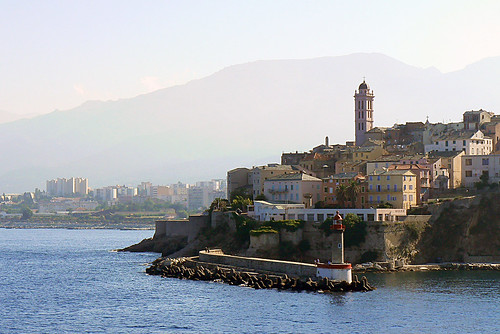
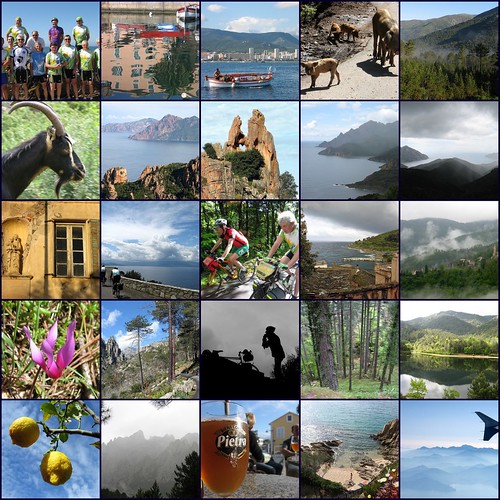
Corsica, France
Corsica ( /ˈkɔːrsɪkə/; French: Corse, IPA: [kɔʁs]; Corsican: Corsica; Italian: Corsica, IPA: [ˈkɔrsika]) is an island in the Mediterranean Sea. It is located west of Italy, southeast of the Frenchmainland, and north of the island of Sardinia.
/ˈkɔːrsɪkə/; French: Corse, IPA: [kɔʁs]; Corsican: Corsica; Italian: Corsica, IPA: [ˈkɔrsika]) is an island in the Mediterranean Sea. It is located west of Italy, southeast of the Frenchmainland, and north of the island of Sardinia.Corsica is one of the 27 régions of France, although strictly speaking Corsica is designated as a "territorial collectivity" (collectivité territoriale) by law. As a territorial collectivity, it enjoys greater powers than other French régions, but for the most part its status is quite similar. Corsica is referred to as a "région" in common speech, and is almost always listed among the other régions of France. Although the island is separated from the continental mainland by the Ligurian Sea and is closer to Italy than to the French mainland, politically Corsica is part of Metropolitan France. It was once briefly an independent Corsican Republic, until being incorporated into France in 1769. Its culture has both French and Italian elements.
Napoléon Bonaparte was born in Ajaccio, where his ancestral home, Casa Buonaparte, is also located. Corsica is also the birthplace of the singers Tino Rossi and Alizée.
via Wikipedia
"A journey of a thousand miles must begin with a single step." -- Lao Tzu Copyright © Demetrios the Traveler
Friday, March 18, 2011
Sarlat -France

Sarlat - Frankreich - Middle age - Le Moyen-Âge - Medioevo - france, originally uploaded by Ela2007.
History
Sarlat is a medieval town that developed around a large Benedictine abbeyofCarolingian origin. The medieval Sarlat Cathedral is dedicated to Saint Sacerdos.
Portable still at Sarlat
Because modern history has largely passed it by, Sarlat has remained preserved and one of the towns most representative of 14th century France. It owes its current status on France's Tentative List for future nomination as a UNESCO World Heritage site to the enthusiasm of writer, resistance fighter and politician André Malraux, who, as Minister of Culture (1960-1969), restored the town and many other sites of historic significance throughout France. The centre of the old town consists of impeccably restored stone buildings and is largely car-free.
Saturday, March 5, 2011
I love Paris
"A journey of a thousand miles must begin with a single step." -- Lao Tzu Copyright © Demetrios the Traveler
Sunday, February 27, 2011
Parlement Européen, Strasbourg - Alsace - France
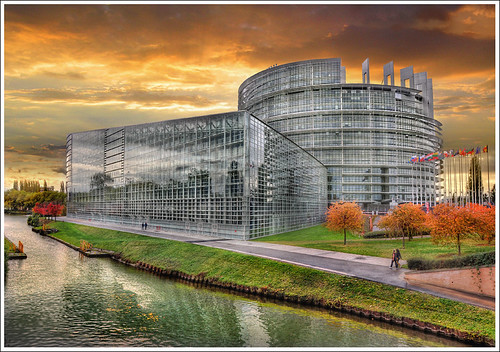
The European Parliament (abbreviated as Europarl or the EP) is the directly elected parliamentary institution of the European Union (EU). Together with the Council of the European Union (the Council), it forms the bicameral legislative branch of the EU and has been described as one of the most powerful legislatures in the world. The Parliament and Council form the highest legislative body within the EU. The Parliament is composed of 736 MEPs (Member of the European Parliament), who serve the second largest democratic electorate in the world (after India) and the largest trans-national democratic electorate in the world (375 million eligible voters in 2009).
It has been directly elected every five years by universal suffrage since 1979. Although the European Parliament has legislative power that such bodies as those above do not possess, it does not have legislative initiative, as most state parliaments within the Union do (however, it does have it in a de facto capacity - see Powers and functions below). Parliament is the "first institution" of the EU (mentioned first in the treaties, having ceremonial precedence over all authority at European level), and shares equal legislative and budgetary powers with the Council (except a few areas where the special legislative procedures apply). It likewise has equal control over the EU budget. Finally, the European Commission, the executive body of the EU, is accountable to Parliament: in particular Parliament can veto it and its President and can force the body to resign.
The President of the European Parliament (Parliament's speaker) is currently Jerzy Buzek (EPP), elected in July 2009. He presides over a multi-party chamber, the two largest groups being the European People's Party (EPP) and the Progressive Alliance of Socialists and Democrats (S&D). The last Union-wide elections were the 2009 Parliamentary Elections. Parliament has two meeting places, namely the Louise Weiss building in Strasbourg, France, which serves for twelve four-day plenary sessions per year and is the official seat, and the Espace Léopold (Dutch: Leopoldruimte) complex in Brussels, Belgium, the larger of the two, which serves for committee meetings, political groups and complementary plenary sessions. The Secretariat of the European Parliament, the Parliament's administrative body, is based in Luxembourg.
Sunday, January 30, 2011
France the people and their language
EF - Live The Language - Paris from Albin Holmqvist on Vimeo.
Commercial for EF Language Schools.
Directed by Gustav Johansson
D.O.P: Niklas Johansson
Typography: Albin Holmqvist
Produced at Camp David
"A journey of a thousand miles must begin with a single step." -- Lao Tzu Copyright © Demetrios the Traveler
Monday, September 20, 2010
Opening of the new rooms devoted to Classical Greek and Hellenistic art | Louvre Museum

The museological approach
Housed in the southwest corner of the Cour Carrée (Sully wing), this ensemble comprises two galleries formerly part of the royal apartments and leading to the famous Caryatids Room, thus completing the chronological presentation of ancient Greek art.
The first gallery, to the north (Rooms 7–12) is part of the wing built for the Renaissance palace. This restructuring offers an authentic journey through the Greek world of the period from the Parthenon to the conquest of Greece by Rome. Each room brings together artifacts from a specific part of the Greek world in a range of materials and media, including vases, jewelry, sculpture and architecture. The visitor will discover art from Athens and central Greece, the Greek cities of southern Italy, Macedonia and northern Greece, Asia Minor and all of the Hellenistic Near East, and Greek Egypt and Cyrenaica (modern Libya).
More recent and running parallel to the first, the second gallery, to the south (Rooms 13–16), was inaugurated in the early 19th century, with courtyards being transformed into the Musée des Antiques, whose contents included the Borghese Collection. Today's refurbishing presents Roman copies of vanished masterpieces of Classical Greek sculpture; it follows a thematic path dedicated to the gods and heroes of mythology and ending in the Venus de Milo room, with the famous statue returning to the place it occupied from 1824 to 1848. In the newly rediscovered niches of the original building the history of the statue's finding is shown, together with images of Aphrodite from the Hellenistic period.
The itinerary then continues through the remodeled Caryatids Room, where the replicas of Hellenistic Greek sculpture are on display. Highlighting some of the oldest rooms in the museum, this new project improves public access to works sometimes overshadowed by the fame of the Venus de Milo, while at the same time making the latter easier to find.
via louvre.fr
Sunday, September 19, 2010
A picturesque time at the Impressionist Normandy Festival
In the footsteps and on the canvases of Monet, Pissarro and provincial artists, past and present intertwine.

By Mike Ives Special to the Los Angeles Times
Last spring in the Paris Metro, I paused to admire a colorful advertisement for the Impressionist Normandy Festival, a celebration of the region's role in the Impressionist painting movement.
My brother Davey, an art history major at Connecticut College, was contemplating an ad for detergent. "Hey, bro!" I called. "Check this out."
Whenever I see Impressionist paintings at New York's Metropolitan Museum of Art, the airy brushstrokes transport me to the late 19th century French villages. So I was intrigued to learn that until late September, the festival will celebrate Impressionist painters and their favorite muses: the Seine Valley, the medieval city of Rouen and seaside towns along France's northern coastline.
Impressionist Normandy presents linked museum exhibitions, concerts, outdoor balls and thematic "Impressionist Itineraries," or self-guided walking-driving tours. Over three days in June, I followed two of the itineraries highlighting two themes: "Gardens" and "The Moment."
Some of the gardens are in Giverny, a touristy town about 50 miles west of Paris and a former hotbed of Impressionist activity. Claude Monet lived in Giverny from 1883 until his death in 1926. After touring his house, Davey and I wandered through his backyard, where Monet composed some of his most iconic paintings. Walking among the artist's bamboo trees and azalea bushes, we followed a babbling brook until we reached his famous waterlily pond.
I had seen Monet's waterlily canvases at the Met in New York and the Musée Marmottan Monet in Paris, so his pond seemed vaguely familiar, like a place you remember from childhood. The scene probably didn't look too much different, I realized, than it had in the 1880s. I marveled at how the painter's hand had magically evoked all those subtle ripples and reflections —
Splash! Plunk!
"A fish!" a little boy observed. "Did anyone see?"
Our next .....
more via latimes.com
Sunday, August 8, 2010
Sunday, June 6, 2010
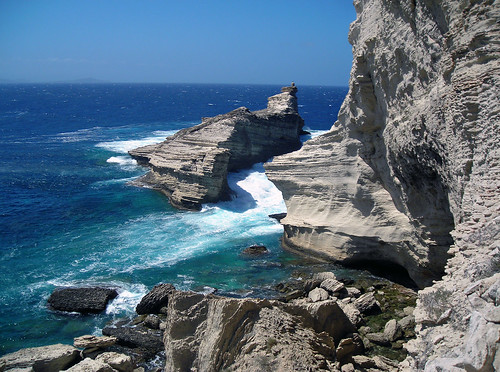
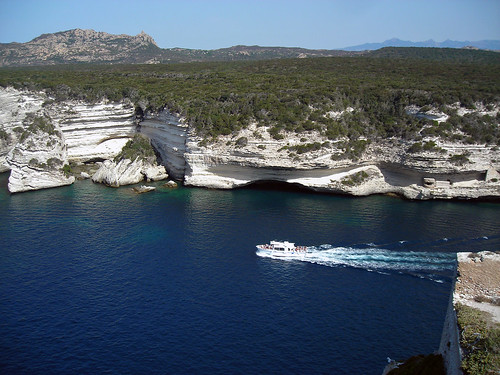
Bonifacio, island of Corsica, France
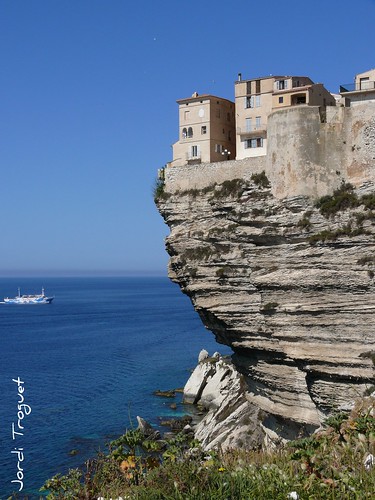
, in the Corse-du-Sud department of France. Its inhabitants are called Bonifaciens, feminine Bonifaciennes. The commune in this case is identical to the canton and is the largest commune of Corsica.
Bonifacio is located directly on the Mediterranean Sea, separated from Sardinia by the Strait of Bonifacio. It is a city placed on the best and only major harbor of the southern coast and also is a commune covering a somewhat larger region including the offshore Isles Lavezzi, giving it the distinction of being the southernmost commune in Metropolitan France. The commune is bordered on the northwest by the canton of Figari and has a short border on the northeast with the canton of Porto-Vecchio. The combined border runs approximately from the Golfe de Ventilegne on the west to the mouth of the Golfu di Sant'Amanza on the east. The coastline circumscribed by the two points is about 75 kilometres (47 mi). Highway N198 runs north along the east coast and N196 along the west.
The islands are part of the French portion, 794.6-square-kilometre (196,300-acre), of the international Bouches de Bonifacio ("Strait of Bonifacio") marine park, a nature reserve, signed into legal existence by France and Italy in 1993 for the protection of the strait against passage of ships bearing dangerous chemicals, and implemented in France by a ministerial decree of 1999 detailing the land to be included in the réserve naturelle de Bouches de Bonifacio for the preservation of wild birds, other fauna and flora, fish and nature in general.
The southern coast in the vicinity of Bonifacio is an outcrop of chalk-white limetone, precipitous and sculpted into unusual shapes by the ocean. Slightly further inland the limestone adjoins the granite of which the two islands, Sardinia and Corsica, are formed. The port of Bonifacio is placed on the Bay of Bonifacio, a drowned ravine of a fjord-like appearance separated from the ocean by a finger-like promontory 1,500 meters (4,900 ft) long and 200 meters (660 ft) wide. In prehistoric post-glacial times when sea levels were low and the islands were connected, the ravine was part of a valley leading to upland Corsica. The maximum draught supported by the harbor is 3.5 meters (11 ft), more than ample for ancient ships and modern small vessels.
The city of Bonifacio is split into two sections. The vieille ville (old town), or la Haute Ville (the Upper city), on the site of a citadel, is located on the promontory overlooking the Mediterranean Sea. The citadel was built in the 9th century with the foundation of the city. The Citadel has been reconstructed and renovated many times since its construction and most recently was an administrative center for the French Foreign Legion. Today it is more of a museum. Historically most of the inhabitants have resided in the Haute ville under the immediate protection of the citadel. The harbor facilities and residential areas below, la marine, line the narrow shelf of the inlet and extend for some distance up the valley, giving the settlement a linear appearance and creating a third residential section limited by St. Julien on the east.
The city and its fortifications also extend for some distance along the cliff-tops, which are at about 70 meters (230 ft) elevation. The cliffs have been undercut by the ocean so that the buildings, which have been placed on the very lip of the precipice, appear to overhang it. The appearance from the sea is of a white city gleaming in the sun and suspended over the rough waters below.
source: http://en.wikipedia.org/wiki/Bonifacio
Bonifacio is located directly on the Mediterranean Sea, separated from Sardinia by the Strait of Bonifacio. It is a city placed on the best and only major harbor of the southern coast and also is a commune covering a somewhat larger region including the offshore Isles Lavezzi, giving it the distinction of being the southernmost commune in Metropolitan France. The commune is bordered on the northwest by the canton of Figari and has a short border on the northeast with the canton of Porto-Vecchio. The combined border runs approximately from the Golfe de Ventilegne on the west to the mouth of the Golfu di Sant'Amanza on the east. The coastline circumscribed by the two points is about 75 kilometres (47 mi). Highway N198 runs north along the east coast and N196 along the west.
The islands are part of the French portion, 794.6-square-kilometre (196,300-acre), of the international Bouches de Bonifacio ("Strait of Bonifacio") marine park, a nature reserve, signed into legal existence by France and Italy in 1993 for the protection of the strait against passage of ships bearing dangerous chemicals, and implemented in France by a ministerial decree of 1999 detailing the land to be included in the réserve naturelle de Bouches de Bonifacio for the preservation of wild birds, other fauna and flora, fish and nature in general.
The southern coast in the vicinity of Bonifacio is an outcrop of chalk-white limetone, precipitous and sculpted into unusual shapes by the ocean. Slightly further inland the limestone adjoins the granite of which the two islands, Sardinia and Corsica, are formed. The port of Bonifacio is placed on the Bay of Bonifacio, a drowned ravine of a fjord-like appearance separated from the ocean by a finger-like promontory 1,500 meters (4,900 ft) long and 200 meters (660 ft) wide. In prehistoric post-glacial times when sea levels were low and the islands were connected, the ravine was part of a valley leading to upland Corsica. The maximum draught supported by the harbor is 3.5 meters (11 ft), more than ample for ancient ships and modern small vessels.
The city of Bonifacio is split into two sections. The vieille ville (old town), or la Haute Ville (the Upper city), on the site of a citadel, is located on the promontory overlooking the Mediterranean Sea. The citadel was built in the 9th century with the foundation of the city. The Citadel has been reconstructed and renovated many times since its construction and most recently was an administrative center for the French Foreign Legion. Today it is more of a museum. Historically most of the inhabitants have resided in the Haute ville under the immediate protection of the citadel. The harbor facilities and residential areas below, la marine, line the narrow shelf of the inlet and extend for some distance up the valley, giving the settlement a linear appearance and creating a third residential section limited by St. Julien on the east.
The city and its fortifications also extend for some distance along the cliff-tops, which are at about 70 meters (230 ft) elevation. The cliffs have been undercut by the ocean so that the buildings, which have been placed on the very lip of the precipice, appear to overhang it. The appearance from the sea is of a white city gleaming in the sun and suspended over the rough waters below.
source: http://en.wikipedia.org/wiki/Bonifacio
Sunday, May 23, 2010
Colmar, Alsace, France
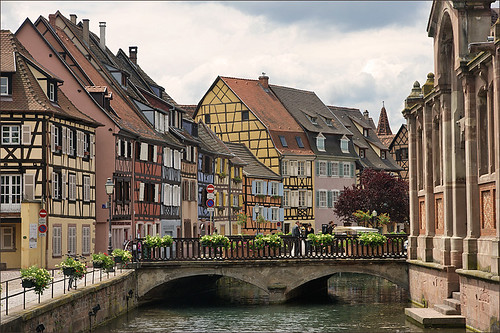
Place des Dominicains in Colmar
Colmar is a commune in the Haut-Rhin department in Alsace in northeastern France.
Colmar is 64 kilometers south-southwest of Strasbourg on the Lauch River, directly to the east of the Vosges Mountains. It is connected to the Rhine by a canal.
It is situated along the Alsatian Wine Route and considers itself to be the "Capital of Alsatian Wine" (capitale des vins d'Alsace).
Colmar has a sunny microclimate and is the driest city in France, with an annual precipitation of just 550 mm, making it ideal for Alsace wine.
Colmar's secular and religious architectural landmarks reflect eight centuries of Germanic and French architecture and the adaptation of their respective stylistic language to the local customs and building materials (pink and yellow Vosges sandstone, timber framing). The medieval centre of this historic town has fine overhanging timber-framed buildings, dating from the 16th and 17th centuries, a dream for the keen photographer.
The area crossed by canals of the river Lauch, and which formerly served as the butcher's, tanner's and fishmonger's quarter, is now called "little Venice" (Petite Venise). Picturesque colourful timber framed houses were built to both sides of the small river La Lauch.
Many tourists visit the town
"A journey of a thousand miles must begin with a single step." -- Lao Tzu Copyright © Demetrios the Traveler
Saturday, May 8, 2010
Moulin Rouge, Paris - France

Carefree life, Flickleness and Joie de Vivre... Those are the three words that could best sum up this unique period in the History of France. It was a rest between two wars, a period of transition between two centuries, during which the social barriers collapsed, when the industrial revolution gave hope of a better life for all, in a rich cultural profusion and that promised much fun.
The middle-class mixed with the riffraff, the popular culture was enchanced in a contented disorder full of joy and vitality. In that atmosphere, which favoured artistic creativity, literary circles appeared and disappeared according to people'meetings, while painters and drawers got especially inspired by this joyful sometimes outrageous but full of fancy atmosphere that broke completely with the rigid classicism of that period.
The Japonism *, a movement of Far-East inspiration using influences from the Japanese style in French Art, was at its height. Toulouse-Lautrec and his famous Japanese engravings was one of the most famous disciples of that time. The atmosphere fitted perfectly to the appearance of the first cabarets, such as the Moulin Rouge in 1889.
the above and more, from:
http://www.moulinrouge.fr/home-flash-gb.html
"A journey of a thousand miles must begin with a single step." -- Lao Tzu Copyright © Demetrios the Traveler
Saturday, April 17, 2010
Mont St. Michel, France
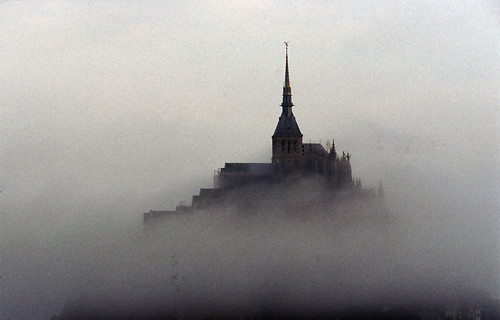
Mont-Saint-Michel is a 1-ha (3-acre) rocky islet topped by a famous Gothic abbey, 1.6 km (1 mi) off the coast of Normandy in northwest France in the Bay of Mont-Saint-Michel in the English Channel. The island, located 5 km (3 mi) from the shore during the Middle Ages, is now surrounded by water only two times a month. Its one cobblestone street climbs in three spirals from a great granite base to the towering Benedictine abbey of Mont-Saint-Michel, an architectural masterpiece built in the 13th century, replacing the original abbey, which was founded in 708 by Saint Aubert, bishop of Avranches, but destroyed by King Philip II of France in 1203.
Its fortifications enabled the islet to withstand repeated English assaults during the Hundred Years' War. The abbey served as a prison during Napoleon I's reign. Restored after 1863, and connected to the mainland by a causeway (completed 1875), the abbey is preserved as a national historical monument and a UNESCO World Heritage Site. It is one of France's great tourist attractions. The abbey is celebrated in Henry Adam's classic study of medieval Christianity, Mont Saint Michel and Chartres (1913).
On the other side of the English Channel, off the coast of Cornwall, in England, is Saint Michael's Mount, the site of a priory (later a castle) that belonged to the Mont-Saint-Michel abbey in the Middle Ages.
Its fortifications enabled the islet to withstand repeated English assaults during the Hundred Years' War. The abbey served as a prison during Napoleon I's reign. Restored after 1863, and connected to the mainland by a causeway (completed 1875), the abbey is preserved as a national historical monument and a UNESCO World Heritage Site. It is one of France's great tourist attractions. The abbey is celebrated in Henry Adam's classic study of medieval Christianity, Mont Saint Michel and Chartres (1913).
On the other side of the English Channel, off the coast of Cornwall, in England, is Saint Michael's Mount, the site of a priory (later a castle) that belonged to the Mont-Saint-Michel abbey in the Middle Ages.
"A journey of a thousand miles must begin with a single step." -- Lao Tzu
Copyright © Demetrios the Traveler
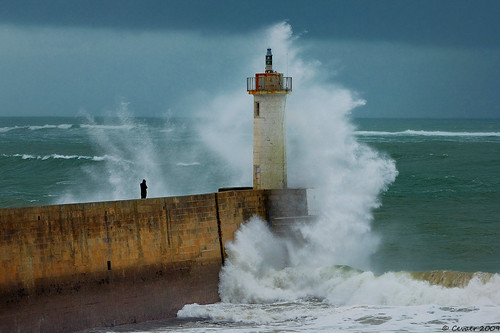
Audierne (Breton: Gwaien), France
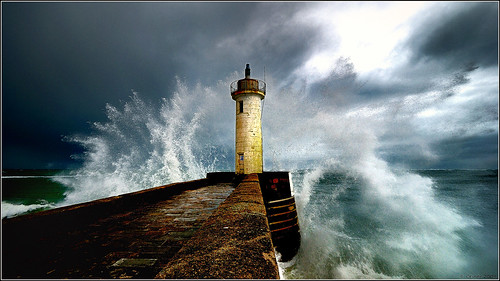
Audierne (Breton: Gwaien) is a commune in the Finistère department of Brittany in north-western France. The town lies on a peninsula at the mouth of the Goyen river and for centuries was a fishing village, with a wide sandy beach. Visitors can take a boat from Audierne's port of Esquibien to the Île de Sein.
The harbour, formerly important to the local fishing industry, is now essentially a yacht port. Remaining of the fishery is an oyster farm, in which the delicacy can be bought. Along the harbour stretches the town's main shopping area with its cafés, bars and restaurants, crêperies, boutiques, estate agents and holiday agencies, the town hall, the tourism office, and the regional bus stop. On Saturday mornings there is a farmers' market, which serves as a meeting place for natives and tourists alike.
Audierne is twinned with Penryn, Cornwall.
"A journey of a thousand miles must begin with a single step." -- Lao Tzu
Copyright © Demetrios the Traveler
Saturday, April 10, 2010
Sarlat, Dordogne, France
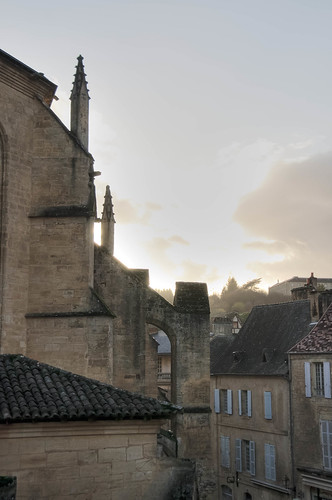
Sarlat - Now we're talking! The most famous town in the region and one of the most renowned and visited in France. It is also one of the most attractive. Often called just Sarlat, the town is actually twinned with its less famous neighbour and is more correctly called Sarlat le Caneda.
Destined to be besieged by tourists at almost all times of the year Sarlat is a beautiful, well restored town a few kilometres north of the River Dordogne. The old town, dating from both medieval and renaissance times is a pleasure to visit, especially during the spring and autumn, or early in the morning. If you can catch the early morning sunshine on the yellow sandstone buildings, so much the better.
Don't miss the streets around the cathedral and the streets to the north of the old town when you visit Sarlat. You will soon become lost in the maze of narrow lanes, with something new to see around every corner. No major sights perhaps - the cathedral in Sarlat is not very exciting, for example - but as a whole town is very attractive.
Before setting off for your walk around Sarlat, visit the tourist office which can provide a suggested walking tour to take in the key attractions. Broadly, the pedestrianised Rue de la Republique runs the length of the old town, with mazes of narrow streets either side. The cathedral is to the south-east of Sarlat, with the attractive Cour des Fontaines and Cour des Chanoines behind.
Frequently you will think yourself lost in the winding medieval streets - don't worry, it's essentially a small town, and sooner or later you will emerge into the light and refind your path!
Don't forget to glance up from time to time as you explore the medieval cobbled streets - the rooves of the buildings in medieval Sarlat are often in 'lauze' - carefully cut stone - and are unusual elsewhere.
Market day in Sarlat is a Saturday.
Destined to be besieged by tourists at almost all times of the year Sarlat is a beautiful, well restored town a few kilometres north of the River Dordogne. The old town, dating from both medieval and renaissance times is a pleasure to visit, especially during the spring and autumn, or early in the morning. If you can catch the early morning sunshine on the yellow sandstone buildings, so much the better.
Don't miss the streets around the cathedral and the streets to the north of the old town when you visit Sarlat. You will soon become lost in the maze of narrow lanes, with something new to see around every corner. No major sights perhaps - the cathedral in Sarlat is not very exciting, for example - but as a whole town is very attractive.
Before setting off for your walk around Sarlat, visit the tourist office which can provide a suggested walking tour to take in the key attractions. Broadly, the pedestrianised Rue de la Republique runs the length of the old town, with mazes of narrow streets either side. The cathedral is to the south-east of Sarlat, with the attractive Cour des Fontaines and Cour des Chanoines behind.
Frequently you will think yourself lost in the winding medieval streets - don't worry, it's essentially a small town, and sooner or later you will emerge into the light and refind your path!
Don't forget to glance up from time to time as you explore the medieval cobbled streets - the rooves of the buildings in medieval Sarlat are often in 'lauze' - carefully cut stone - and are unusual elsewhere.
Market day in Sarlat is a Saturday.
"A journey of a thousand miles must begin with a single step." -- Lao Tzu
Copyright © Demetrios the Traveler
Monday, March 15, 2010
Martinique — Overseas region of France
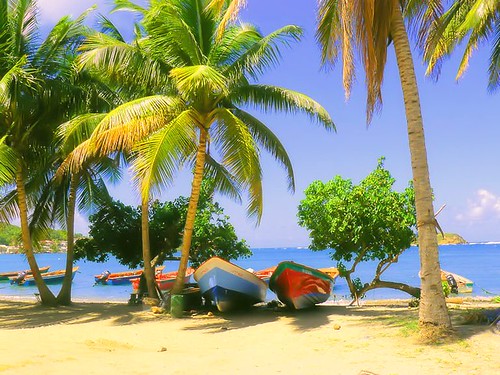
Martinique is an island in the eastern Caribbean Sea, with a land area of 1,128 km2 (436 sq mi). It is an overseas region of France, consisting of a single overseas department. To the northwest lies Dominica, to the south St Lucia, and to the southeast Barbados. As with the other overseas departments, Martinique is one of the twenty-six regions of France (being an overseas region) and an integral part of the Republic.
As part of France, Martinique is part of the European Union, and its currency is the euro. Its official language is French, although many of its inhabitants also speak Antillean Creole (Créole Martiniquais). Martinique is pictured on all euro banknotes, on the reverse at the bottom of each note, right of the Greek ΕΥΡΩ (EURO) next to the denomination.
"A journey of a thousand miles must begin with a single step." -- Lao Tzu
Copyright © Demetrios the Traveler

 travel
King of the bay Diamant bay in Martinique

Diamond Rock (Rocher du Diamant) is a 175 meter (574 feet) high basalt island located south of Fort-de-France, the main port of the Caribbean island of Martinique.
The uninhabited island is about three kilometers from Pointe Diamant. The island gets its name from the reflections that its sides cast at certain hours of the day, which evoke images of a precious stone. Its claim to fame is the role that it played in the Napoleonic Wars.
The rock is a volcanic plug, a remnant of the strong volcanic activity that affected the region some one million years ago.
However, a Captain Hansen of the Norwegian steamship Talsiman reported that on 13 May, 1902, he observed what he took to be a volcanic eruption from a hole in the rock. This was at the time of the devastating volcanic eruption Mount Pelée that destroyed Saint-Pierre. Hansen did not investigate further.
Like the other 47 islets that circle Martinique, the Rock has its own ecological characteristics. It is sunnier than the main island, drier, and subject to a long seasonal dry period. Today it is covered in undergrowth and cacti.
Relatively inaccessible and inhospitable, the island is uninhabited, which has permitted it to remain a sanctuary for a species that had been believed to be extinct.
A nature survey has suggested that Diamond Rock is probably the last refuge for a species of reptile once endemic to Martinique, the Couress grass snake (Liophis cursor).
Below water the Diamond Rock cavern, a deep triangular cave, is a popular attraction for scuba divers. The cave is said to contain prolific quantities of beautiful sea fans and corals, though strong currents make diving the island a risky venture.
The author John Fine reports that while diving he found one of the Rock's cannon that the French had toppled from the summit.
Copyright © Demetrios the Traveler
travel
Subscribe to:
Posts (Atom)

The harbour, formerly important to the local fishing industry, is now essentially a yacht port. Remaining of the fishery is an oyster farm, in which the delicacy can be bought.
Along the harbour stretches the town's main shopping area with its cafés, bars and restaurants, crêperies, boutiques, estate agents and holiday agencies, the town hall, the tourism office, and the regional bus stop. On Saturday mornings there is a farmers' market, which serves as a meeting place for natives and tourists alike.
Audierne is twinned with Penryn, Cornwall.
source and more info @: http://en.wikipedia.org/wiki/Audierne
and @ the official site: http://www.audierne.fr/