Friday, April 3, 2009

53 Korean Words Related to our feelings

Korean words that are related to our Feelings
EnglishHangulPronunciation
(I) …(you)(나는) (당신을) ..해요(Naneun) (dangsineul) ..haeyo.
love사랑해요.Saranghaeyo.
like좋아해요.Joahaeyo.
hate미워해요.Miwohaeyo.
detest증오해요.Jeungohaeyo.
dearly love사모해요.Samohaeyo.
Thank you.고맙습니다.Gomapseumnida.
Thank you.감사합니다.Gamsahamnida.
I am sorry.미안합니다.Mianhamnida.
I am very sorry.죄송합니다.Joesonghamnida.
I feel (am)…나는 ..해요Naneun ..haeyo.
angry화가나요.Hwaganayo.
sad슬퍼요.Seulpeoyo.
happy기뻐요.Gippeoyo.
merry즐거워요.Jeulgeowoyo.
excited신나요.Sinnayo.
depressed우울해요.Uulhaeyo.
afraid무서워요.Museowoyo.
nervous불안해요.Bulanhaeyo.
thankful고마워요.Gomawoyo.
sorry미안해요.Mianhaeyo.
puzzled황당해요.Hwangdanghaeyo.
confused당황스러워요.Danghwangseureowoyo.
pleased만족스러워요.Manjokseureowoyo.
disappointed실망이예요.Silmangiyeyo.
excited흥분되요.Heungbundoeyo.
surprised놀라워요.Nolrawoyo.
happy행복해요.Haengbokaeyo.
unhappy불행해요.Bulhaenghaeyo.
lonely고독해요.Godokaeyo.
lonely외로워요.Oerowoyo.
refreshed상쾌해요.Sangkoaehaeyo.
unpleasant불쾌해요.Bulkoaehaeyo.
comfortable편해요.Pyeonhaeyo.
falsely accused억울해요.Eogulhaeyo.
shameful부끄러워요.Bukkeureowoyo.
ashamed창피해요.Changpihaeyo.
stuffy (or difficulty in breathing)답답해요.dapdapaeyo.
bored지루해요.Jiruhaeyo.
painful아파요.Apayo.
It is …(그것은) ..해요(Geugeoseun) ..haeyo.
inconvenient불편해요.Bulpyeonhaeyo.
hard힘들어요.Himdeureoyo.
difficult어려워요.Eoryeowoyo.
easy쉬워요.Swiwoyo.
interesting재미있어요.Jaemiisseoyo.
mystic신비해요.Sinbihaeyo.
charming매력적이예요.Maeryeokjeokiyeyo.
moving감동적이예요.Gamdongjeokiyeyo.
admirable훌륭해요.Hullyunghaeyo.
stylish멋있어요.Meositsseoyo.
pretty예뻐요.Yeppeoyo.
beautiful아름다워요.Areumdawoyo.
cute귀여워요.Gwiyeowoyo.
complicated복잡해요.Bokjaphaeyo.
simple단순해요.Dansunhaeyo.

"A journey of a thousand miles must begin with a single step." -- Lao Tzu
Copyright © Demetrios the Traveler


Digg!


Sunday, March 29, 2009

Koh Yao, Thailand, Putting Things In Perspective

Ko Yao (Thai: เกาะยาว) is a district (Amphoe)
Ko Yao (เกาะยาว), sometimes written Koyao, is a group of islands between Phuket and Krabi. There are two main islands, Ko Yao Noi ("Small Long Island") and Ko Yao Yai, with Noi being the more developed of the two.


Ko Yao Noi remains a beautiful island, where most people still believe that the island should be preserved from human degradation.

Sea Gypsies (Moken people) were inhabiting the Bay before anybody else, except maybe other nomadic people like forest hunters and collectors (Sakai, Negritos). The 3,500 or so inhabitants of Koh Yao Noi are thought to be recent migrants from the Malay Peninsula (Satun, Trang).

The Mon population, linguistically and culturally belonging to the Khmer ethnolinguistic group, did settled in peninsular Thailand since ever, ruling maritime states like the one of Ligor (Nakhon Si Thammarat). They melt continuously with Southern migrants from Malaysia and with Northern rulers (Thai), over centuries of commercial exchanges and political conflicts. Most probably the Mon stock remains prevalent for most of the people living nowadays in Southern Thailand, including people of Koh Yao.

Numerous cave paintings hidden in the many islands of the bay, extending from 2000 years ago to last century, attest the influence of distinct communities in the emergence of a mixed origin population, living now in the provinces of Phang Nga, Phuket, Krabi and Satun.

The most recent migrations (17th-18th century) from Satun and Trang to Ko Yao Yai and Koh Yao Noi is attested by the fact that the particular dialect spoken on the island still bear obvious Malaysian lexical traces, particularely regarding toponyms and vernacular names of the flora species.

The main industries on the island are fishing and rubber planting. A little rice farming and some fruit, palm and coconut plantations are evident. Boat building and farming techniques here have been passed from father to son and, while some of the youngsters leave Ko Yao to seek the bright lights of Phuket, most return to their tight knit community

more in wikipedia


"A journey of a thousand miles must begin with a single step." -- Lao Tzu
Copyright © Demetrios the Traveler


Digg!


Friday, March 27, 2009

up to Himalayas...


Anthony Bourdain discusses life as a television host in the Himalayas while suffering from lack of oxygen. This is the extended cut that you won't see in the final show.


Anthony Bourdain: No Reservations premieres Monday, July 30th at 10PM E/P on Travel Channel.
"A journey of a thousand miles must begin with a single step." -- Lao Tzu
Copyright © Demetrios the Traveler


Digg!


Thursday, March 26, 2009

Koh Phi Phi Don islands, Thailand.

a Water Magnet,

The Phi Phi Islands (Thai: หมู่เกาะพีพี) are located in Thailand, between the large island of Phuket and the western Andaman Sea coast of the mainland. Phi Phi Don, the larger and principal of the two Phi Phi islands, is located at [show location on an interactive map] 7°44′00″N, 98°46′00″E. Both Phi Phi Don, and Phi Phi Leh, the smaller, are administratively part of Krabi province, most of which is on the mainland, and is located at [show location on an interactive map] 8°02′30″N, 98°48′39″E.

Ko Phi Phi Don ("ko" (Thai: เกาะ) meaning "island" in the Thai language) is the largest island of the group, and is the only island with permanent inhabitants, although the beaches of the second largest island, Ko Phi Phi Lee (or "Ko Phi Phi Leh"), are visited by many people as well. There are no accommodation facilities on this island, but it is just a short boat ride from Ko Phi Phi Don. The rest of the islands in the group, including Bida Nok, Bida Noi, and Bamboo Island, are not much more than large limestone rocks jutting out of the sea.

Phi Phi Don was initially populated by Muslim fishermen during the late 1940s, and later became a coconut plantation. The Thai population of Phi Phi Don remains more than 80% Muslim.But the actual population if counting laborers, especially from the north-east, from the mainland is much more Buddhist these days.

Ko Phi Phi Leh was the backdrop for the 2000 movie The Beach. Phi Phi Leh also houses the 'Viking Cave', from which there is a thriving bird's nest soup industry. There was criticism during filming of 'The Beach' that the permission granted to the film company to physically alter the environment inside Phi Phi Islands National Park was illegal. [1] The controversy cooled down however, when it was discovered that the producers had done such a decent job of restoring the place that it finally looked better than it had done before.

Following the release of The Beach, tourism on Phi Phi Don increased dramatically, and with it the population of the island. Many buildings were constructed without planning permission.[citation needed]

Ko Phi Phi was devastated by the Indian Ocean tsunami of December 2004, when nearly all of the island's infrastructure was wiped out. Redevelopment has, however, been swift, and services like electricity, water, Internet access and ATMs are up and running again, but waste handling has been slower to come back online.

from: Wikipedia


"A journey of a thousand miles must begin with a single step." -- Lao Tzu
Copyright © Demetrios the Traveler


Digg!


Sunday, March 22, 2009

Scotland, UK a Frozen Corona


Frozen Corona, originally uploaded by antsplan.

Partialy frozen circles of ice surrounded by a completley frozen loch in Highlands, Scotland.

This was an 8 mile hike wih my mate David to get this shot and it was worth every bit of effort. It was brutally cold and my fingers and toes ceased to feel about half way in. We sheltered from the wind and had a bit of food in an old hut by the side of the loch. The food tasted great...

It was actually a pleasure just to see this phenomena with my own eyes and the cherry on top just to get a shot. I'd have loved for the bottom part of the frame to have been out of shadow but as David said, "the big guy controlling the lights just wasn't playing ball"

Crackin' day out. This for me is what photography is all about, experience, feel, live it first, the shot comes second (well sometimes ;-) )

a great photo and a great quote


"A journey of a thousand miles must begin with a single step." -- Lao Tzu
Copyright © Demetrios the Traveler


Digg!


Saturday, March 21, 2009

Castle of Platamonas, Thessaly, Greece


Castle of Platamonas, originally uploaded by maksid.

The Byzantine Castle of Platamonas (platamonas = a long beach) is located in the southern part of Pieria, on the side of the national motorway, on the top of a small hill by the sea.
It is built at a key-position, jist opposite the "passage" of the Valley of Tempi, which has connected Thessaly to Pieria since the remote antiquity.
It has been supported reasonably that the city Heraclia or Heraclion which was probably built in the 5th century BC, was located in exactly the same place. The castle -its greatest part at least- was built by the Franc king of Thessaloniki, Bonifacius e Monferèt, in 1205, upon a Byzantine castle that had previously existed there, as parts of its castle walls -dating from the 6th, 9th and 10th centuries- confirm.
During the years 1218-1224 AD, the castle was seized by the Duke of Hepirus, Angelos Komninos, who gave an end to the Franc Occupation in Thessaloniki in 1224 naming this city the capital of the Byzantine Empire.

The Castle of Platamonas was conquered -about in 1389- by the Turks, who, thus, could have the overall control over the "passage" of the Valley of Tempi, leading to Southern Greece. Later on, nevertheless, while Mourat was encirclinf the Bay of Thermaikos, the Venetians took over the administration of Thessaloniki in 1423. The castle of Platamonas was fortified, then, on a parallel with the fortification of Cassandra, Chalkidiki, so that control over the entire Bay of Thermaikos would by possible.

During the years of the Turkish Occupation, the Castle of Platamonas was considerably fortified very early, owing to its strategic position and the commencement of the nationalistic liberating movements and recolutions taken up by the Greeks, the epicentre of which uprisings being the Olympus.
Even more, Captain Lazos' -coming from the district of Olympus- son, John, managed to conquer the castle after a row of tremendous battles against its Albanian defenders.

When, later on, Southern Greece was liberated and Thessaly was attached to it (1881), the Castle of Platamonas at the Greek-Turkish of that time, regained a new and consederable significance for the Turks.
Nevertheless, it was abandoned afterwards as its defence would be of no avail to the conquerors.

Pictures of Platamonas' Castle 
Archaeology - Monuments

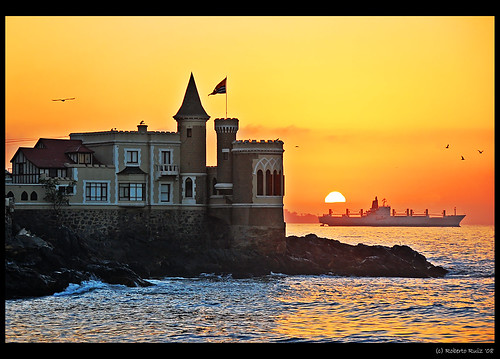
Castillo Wulff, Chile


Atardecer en el Castillo Wulff, originally uploaded by B'Rob.
Centenary Castle Wulff of Viña del Mar is always a good subject for photography. It caught me composition of this late afternoon. I really love this place.

For this residence construction in above mentioned place Wulff had to request a special law that was allowing its constructuin since sea shores belong to Chile State. Areas were acquired by Wulff in 1904, taking effect construction of this chalet between 1905 and 1906 giving end to the building in 1906.

Naval Museum occupied these dependences until ends of 1990 decade, when it is implemented there the Sea Culture Museum.

Castle remains uninhabited a brief time until Municipality recovers it and at present, its spaces have given content to Local Municipality Patrimony Unit.

Golden Gate Bridge, San Francisco, California, USA


Rust and Surf # 2, originally uploaded by PatrickSmithPhotography.
The Golden Gate Bridge is a suspension bridge spanning the Golden Gate, the opening of the San Francisco Bay onto the Pacific Ocean. As part of both U.S. Route 101 and State Route 1, it connects the city of San Francisco on the northern tip of the San Francisco Peninsula to Marin County.
The Golden Gate Bridge was the longest suspension bridge span in the world when it was completed during the year 1937, and has become an internationally recognized symbol of San Francisco and California. Since its completion, the span length has been surpassed by eight other bridges. It still has the second longest suspension bridge main span in the United States, after the Verrazano-Narrows Bridge in New York City. In 2007, it was ranked fifth on the List of America's Favorite Architecture by the American Institute of Architects.

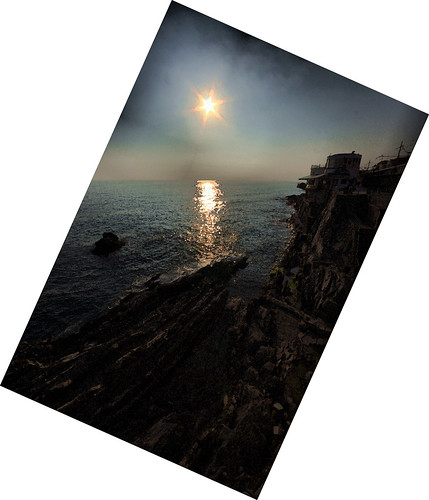
Nervi, Riviera Levante, Italy

Nervi is a former fishing village , now a seaside resort in Liguria, in northwest Italy. Once an independent comune, it is now a quartiere of Genoa. 

Nervi is 7km east of central Genoa.
Located 25 meters above sea level, Nervi is the oldest winter resort on the Riviera di Levante, the part of the Italian Riviera east of Genoa. 

At the beginning of the century, it's mentioned as being surrounded with groves of olives, oranges and lemons, and beautiful gardened villas. The climate is moist and less dusty than the Riviera di Ponente, the part of the Italian Riviera west of Genoa, and is especially in favor with those who suffer from lung complaints.

from wikipedia
en.wikipedia.org/wiki/Nervi

readers

labels and tags

Powered By Blogger